

BFI Screening with the DWAS: Doctor Who: 20 Years On

Twenty years for a television programme is a landmark. Who knew when the series revived on the 26th March 2005 that it would be a success? The BFI, in conjunction with the DWAS (Doctor Who Appreciation Society), held an event recently to screen the episodes Dalek and Father’s Day from the first series and talk about the impact the show has had over the 60 years since the original programme first hit the screens.
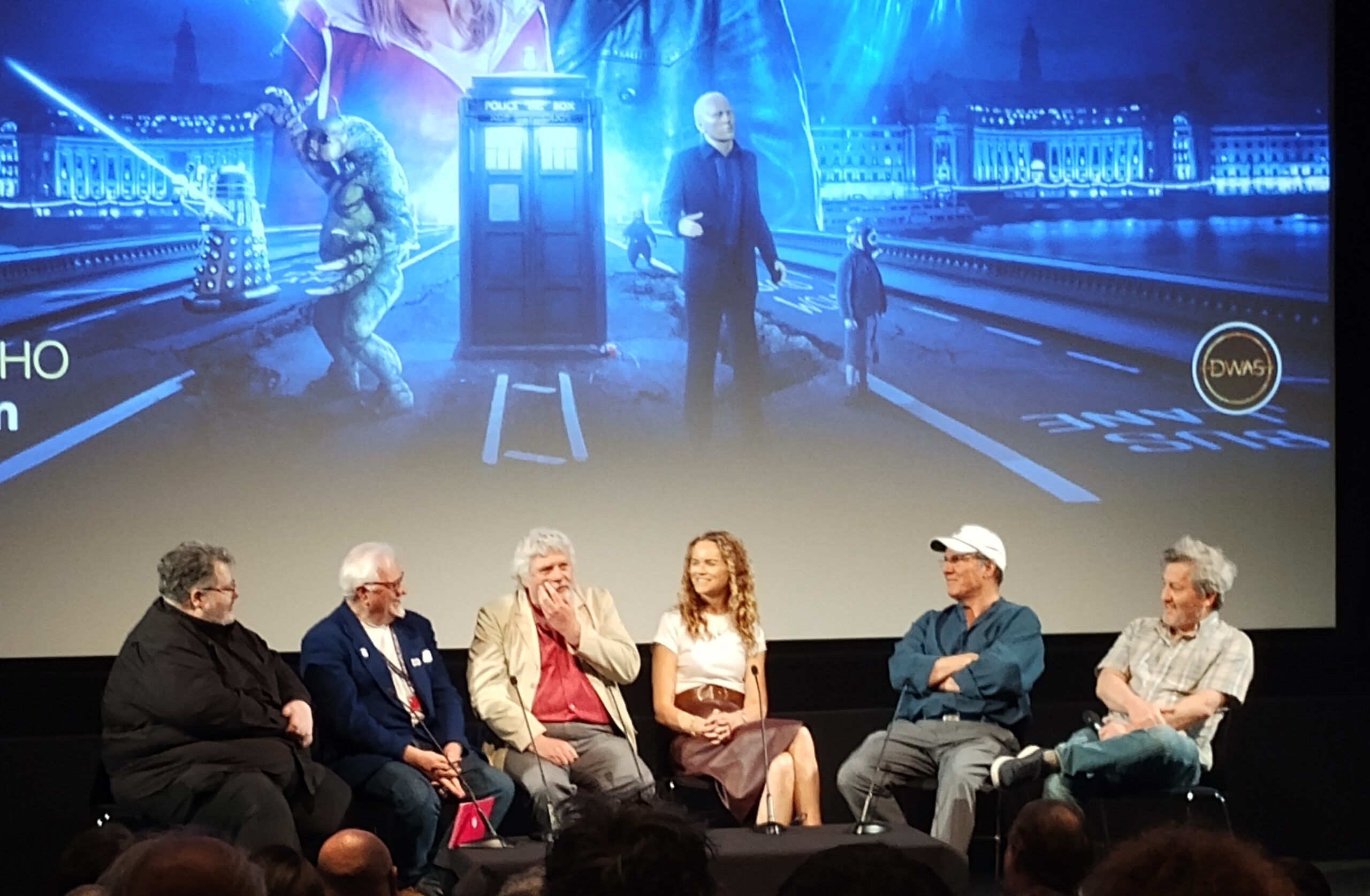
BFI Hosts Justin Johnson (Lead Programmer for BFI) and Dick Fiddy (BFI Archive Television Programmer) were there on hand to welcome an almost full auditorium of fans…
Interview with Tony Jordan – Coordinator of The Doctor Who Appreciation Society
The first guest invited onto the stage was Tony Jordan from the DWAS. Tony Jordan is part of the DWAS convention organisation team and is responsible for social media/promotions, and was asked about the origins of the society. It was founded in May 1976 by Jan Vincent-Rudzki and Stephen Payne from the Westfield College Doctor Who Appreciation Society, and the editors and readers of the fanzine Tardis. He explained they were very shrewd to contact the Doctor Who production office and gain recognition from the BBC. The recognition from the BBC hasn’t been taken away, and at the height of its membership, there were over 3500 DWAS members.
There has been a monthly newsletter, The Celestial Toyroom, since the society was established, with fan comments, reviews and articles. Titled after the first episode of the story, The Celestial Toymaker, the magazine was a source of news for fans due to the association with the production office. The society also arranged the first convention in Battersea, London, in August 1977 and established international fan clubs in the United States, Australia and New Zealand, some of which still exist today.

Due to the changing landscape of how fandom interacts and receives news about the show, Tony Jordan revealed the society has had to reset its goals. Official paid membership ceased at the end of March this year, and the society has embraced the digital age with 30,000 followers on social media. The Celestial Toyroom Magazine | DWAS Online will be available as a free download from June 2025. The society has increased its convention output with regular classic Who screenings and guest events at Riverside Studios in Hammersmith, West London, as well as its annual two-day convention event THE CAPITOL: FIFTY YEARS OF DWAS, which is returning to its original home in Crawley in West Sussex in May next year.
Interview with writer Robert Shearman, actors Anna-Louise Plowman & Corey Johnson and director Joe Ahearne
“Dalek” is a rather special episode in the reintroduction of Doctor Who to the 21st century for the way it explores different themes of survival, revenge and change between the Doctor and a lone Dalek. To recap the story, the Ninth Doctor and Rose visit Utah in 2012 and arrive in an underground bunker full of alien exhibits. The exhibition is owned by Henry van Statten, and the Doctor is terrified to discover that there is a live prisoner, a Dalek. It’s the last Dalek after the Time War.
Writer Robert Shearman was asked about the origins of the television serial “Dalek”, which he explained was based on a Big Finish audio story he originally wrote called Jubilee starring the 6th Doctor. As an introduction to a new audience, Dalek was quite different. Robert Shearman recalled feeling apprehensive about getting the tone correct in terms of violence and darkness in Dalek. He had read some of the other scripts in series one, which were more comedic, but was encouraged by Russell T Davies to go as dark as they could for the early evening slot.
He also remembered the stress of whether the Terry Nation estate would grant permission for use of the Daleks and having written five drafts, then changing to write for a new monster given to him by Russell, which would later become the Toclafane in series three.
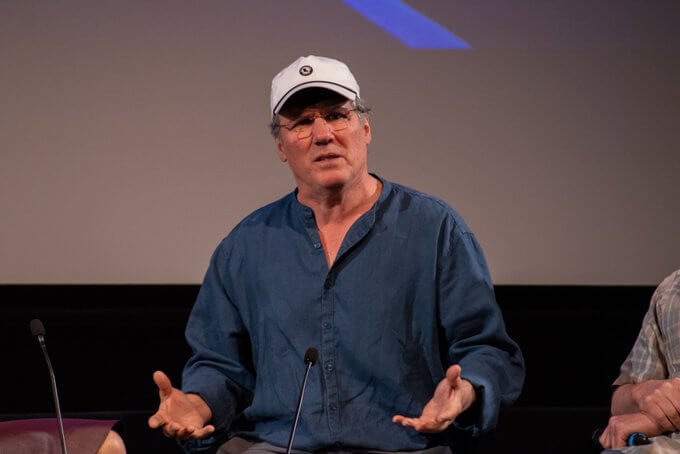
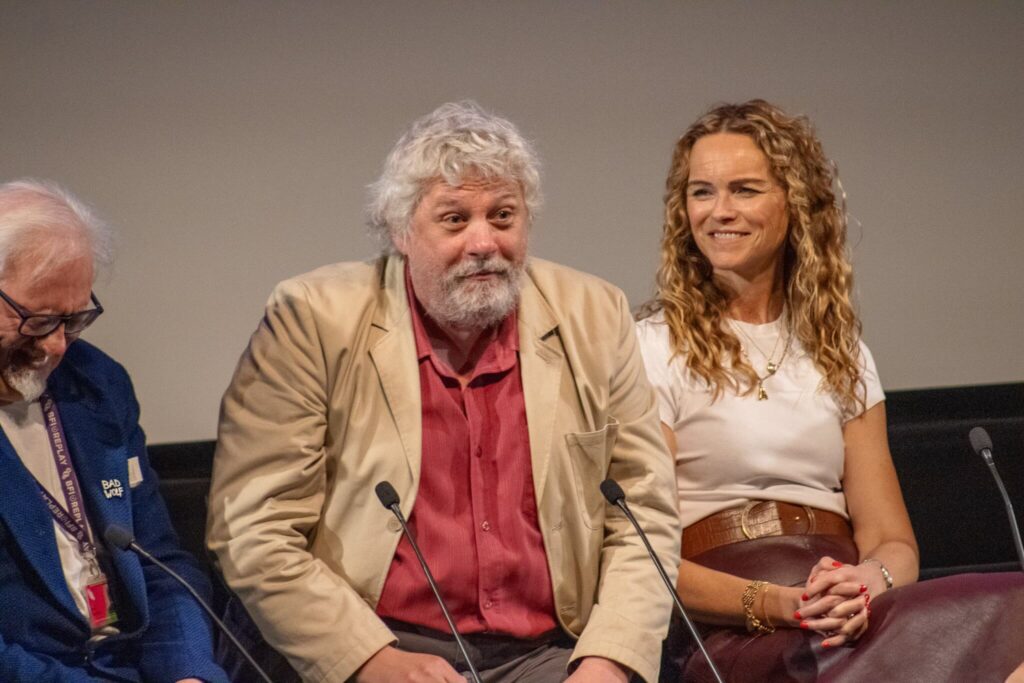
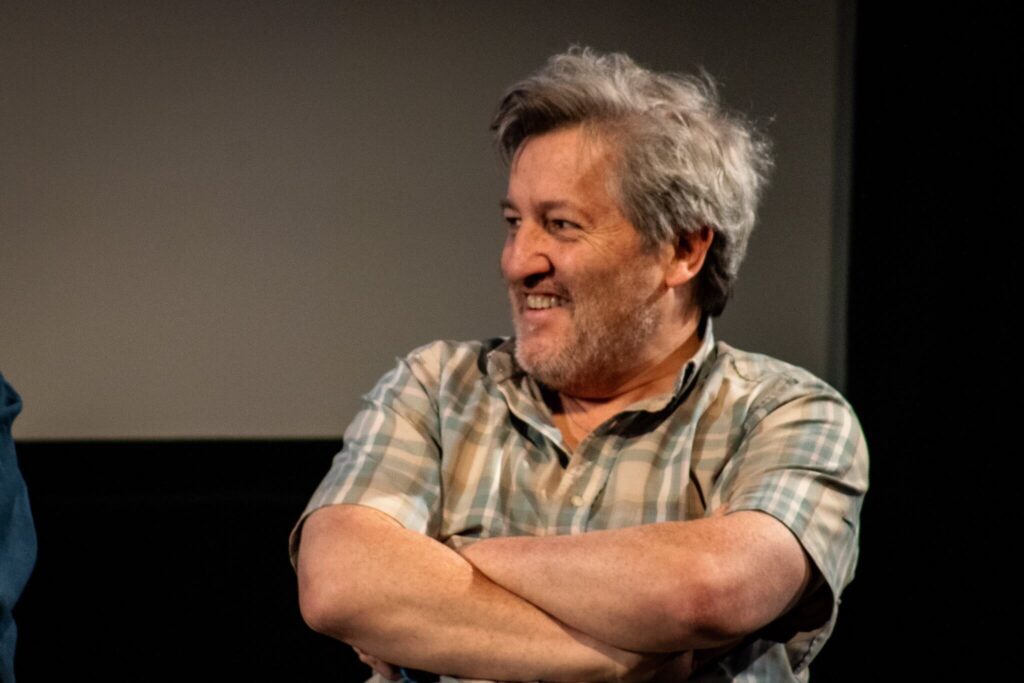
The rights to use the Daleks were agreed eventually, but it was also a valuable lesson as it forced Robert to create more than the initial impact of having a Dalek and to have reasons to justify the Dalek’s existence. Robert praised the direction by Joe Ahearne, which created depth to his writing with scenes such as the confrontation scene and filming the Dalek in such a way that it had dignity and personality. He recalled conversations with Russell T Davies not to change the look of the Daleks from how they had been in the 1960s because their designs were what made children scared and excited to mimic them in the playground.
Actor Corey Johnson, who played Henry van Statten in Dalek, praised the conviction that Chris Eccleston brought to the role of the 9th Doctor. In a move away from the eccentric doctor of the classic series, Corey considered the way Chris rebooted the series in a far more down-to-earth way. Bringing his personality and energy in a way he said he hadn’t seen since. When asked if he could act with another Doctor instead of Christopher Eccleston, Corey felt he was such a unique characterisation that he stands very much on his own.
Actor Anna-Louise Plowman played secretary Diana Goddard, and being brought up in America, wasn’t aware of the programme before being invited as an actor for a role. She has grown to understand though over the years, what a huge fan base the programme has. Corey Johnson recalled talking to friends before the episode aired and telling them he was in an episode called Dalek and their animated excitement at the return of the Daleks. He was acutely aware of the influence of the monsters as his friends told him of their dreams as children that the Daleks would get them.
Their solution was to climb the stairs to escape the Daleks because, as we all know, they can’t climb stairs. Corey recalled with a wicked smile and too much audience laughter, seeing in the script the word “escalate” referring to their ability to now levitate and knowing the fans would “have their minds blown” by the revelation.
Joe Ahearne discussed his directing experience on Dalek. He’d watched Tom Baker and was aware of the programme, but not an enthusiastic fan as such. Much like with Rob Shearman, there was an awareness that the 7 pm timeslot meant he couldn’t show anything explicit in terms of horror. He decided to turn off the lights in the studio to keep the surprise of the Dalek for old and new fans alike. Joe Ahearne directed five episodes in the first series and never did come back, partly due to being he said “Who’d out”. He recalled that the workload and pressure were intense for a series attempting a reboot of a 20th-century series, and the ambition was massive. He praised the writing of Russell T Davies as the reason we are still watching the series today.
Interview with director Joe Ahearne, actor Camille Coduri and composer Murray Gold
As our second panel took to the stage, there was rapturous applause for what can be seen as a very popular story in Father’s Day. The story is about coming to terms with loss, but is underplayed with raw emotion. To recap in a flashback, Jackie Tyler is talking to her young daughter Rose, telling her of the day her father Pete was struck and killed by a hit-and-run driver while picking up a gift to take to their friends’ wedding. In the present day, Rose becomes nostalgic and asks the Doctor if it’s possible to witness her father’s death and be there for him when he dies.
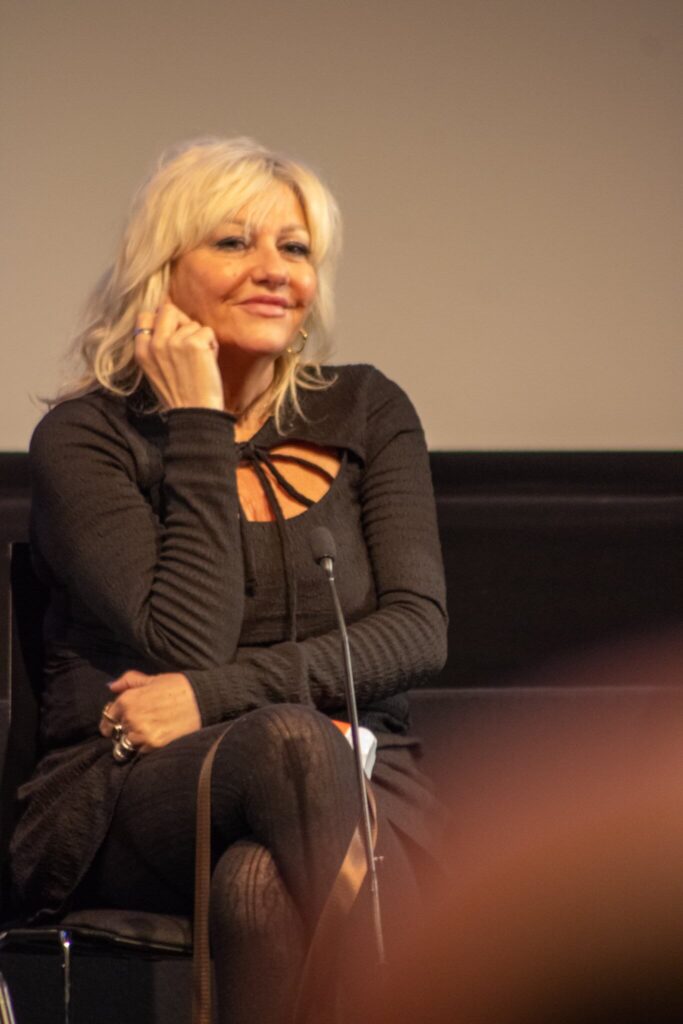
Actor Camille Coduri played Jackie Tyler in the first four seasons of the revived series and recalled how she found Doctor Who as a child. She watched from behind the sofa and became obsessed with Jon Pertwee, seeing him as a magical wizard. When the change to Tom Baker occurred, she became quite upset as a young child might and decided she wouldn’t watch again until the revival and the first episode, Rose.
She praised Christopher Eccleston’s performance and looked back very fondly on her time. She recalled being very excited at the thought of being Billie Piper’s mum. It was very much a new series, so she and the rest of the cast were also surprised at the success of the merchandise and its popularity. However, Jackie Tyler hasn’t been made into a doll, which Camille laughed was needed. Prompted by a question from the audience, Camille talked about returning to see the “Powell” estate in Cardiff a couple of years ago and how important it is in setting the scene of where the Tylers come from.
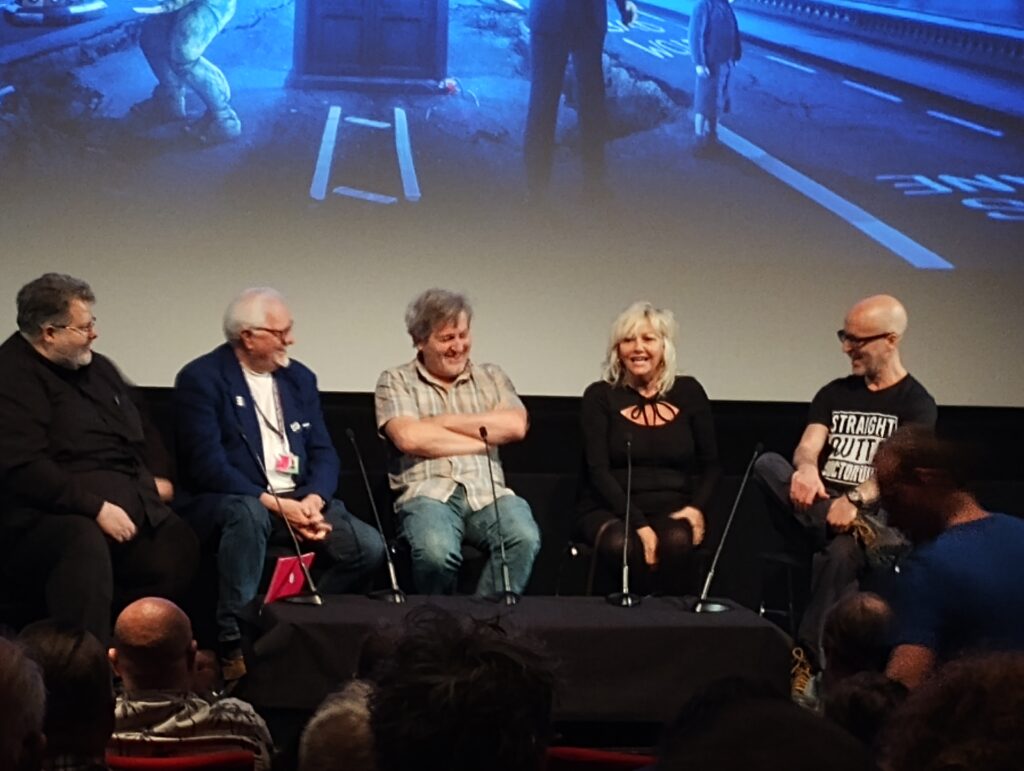
Composer Murray Gold has produced some memorable pieces of incidental music and acknowledged his love of the challenge of creating specific pieces of music to match he different tones and genres that the show can visit. Murray was asked about an official release of all his music, which he confirmed will happen at a future point, whilst acknowledging he has a mountainous amount of music he has produced.
Asked about the reimagining of the original theme, Murray described being quite reticent to create a new version. The sense came through that he was reluctant to change the “sanctity and purity ” of the original Ron Grainer version. His 2005 version of the theme had extra strings at one point, and it kept changing. He felt the result completely demolished the original theme.
Murray was asked to create the specific musical score for Maestro in The Devil’s Chord, but he prefers not to know too much about a script beforehand. Asked about whether Russell T Davies talked through any of the scripts he writes in terms of preparing him for the type of music required or any of the show arcs, Murray replied a resounding no! However, Murray is aware of being able to pick up so many emotional cues in the script. Camille Coduri quipped that Russell T Davies and Murray Gold are much like the songwriting partnership of Bernie Taupin and Elton John.
Going back to the second episode screened for this event, Murray was asked about the subtle piano incidental music for Father’s Day as Pete Tyler prepares to say goodbye and goes to his sad death. Murray explained how he picked up on the tone of sadness and resignation, which is a universal truth when we have to lose someone. He does it as honestly as he can, and he spoke about the unexpectedness of realising that Doctor Who could be a foil for showing emotions of compassion, loss so boldly twenty years ago, and it’s a theme he sees is continuing into the current day.

To rapturous applause, the final point of order of the event was an award presentation to Murray Gold. In recognition of his contribution over the last 20 years, Murray Gold was presented with the Outstanding Achievement award from the DWAS. He was presented the award by long-time Doctor Who fan Frank Skinner. Murray described it as “one of the nicest surprises” as he left the show in 2017 and lamented then his recently born daughter wouldn’t see him as the composer of Doctor Who. He was happy to return as he realised his daughter could now see that, and he had thought he never wanted to lose his name in association with the show. He accepts it will be his legacy.
It was a great event with the BFI, and I really hope the collaboration with the DWAS continues.


Comments
No one has left a comment yet.
Be the first and get the conversation going.