

Projections in Time: Space and Nine Screening at Riverside Studios
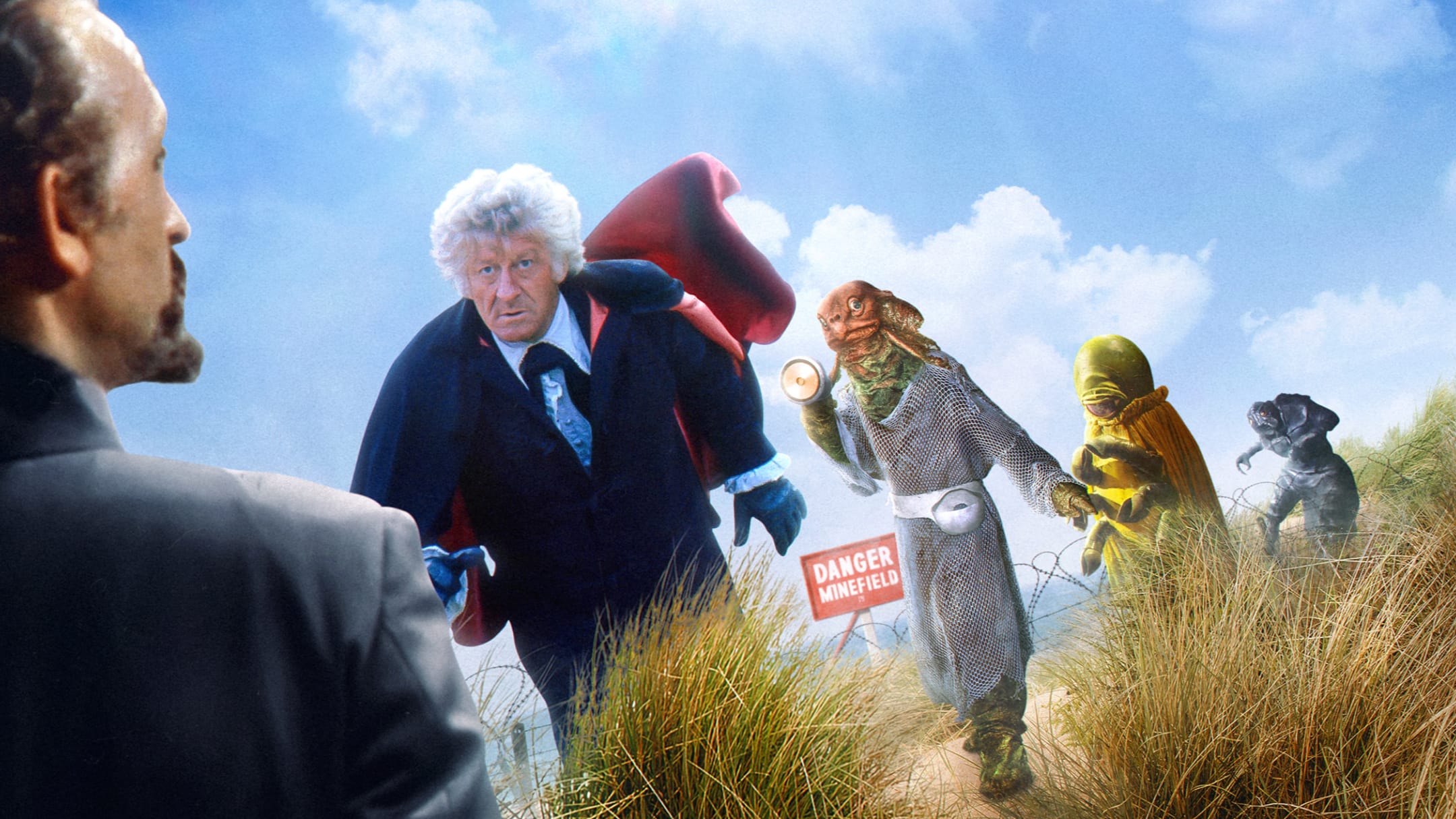
The Doctor Who Appreciation Society were back at Riverside Studios in Hammersmith as part of their popular “Projection in Time” series of events. For this event, we were treated to four Jon Pertwee episodes from season nine, broadcast in 1972.
The stories shown were The Curse Of Peladon (Episode Four), The Sea Devils (Episode Four), The Mutants (Episode Three) and The Time Monster (Episode Five). The DWAS always manage to secure guests from in front and behind the scenes for these events, which makes for in-depth and fascinating panels and this time was no different.
Q&A Session One Highlights
Following the screening of the episodes from The Curse of Peladon and The Sea Devils, the first panel of guests joined the stage to be interviewed by Tony Jordan from the DWAS.
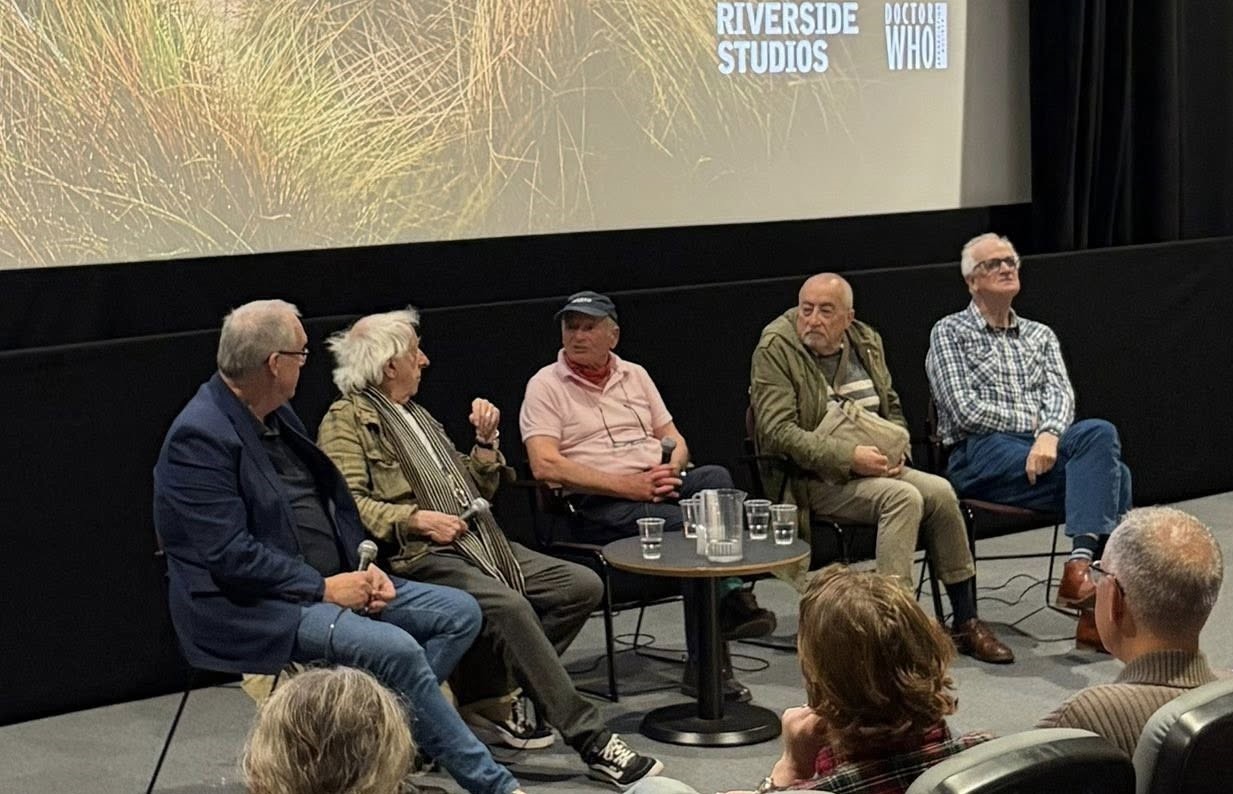
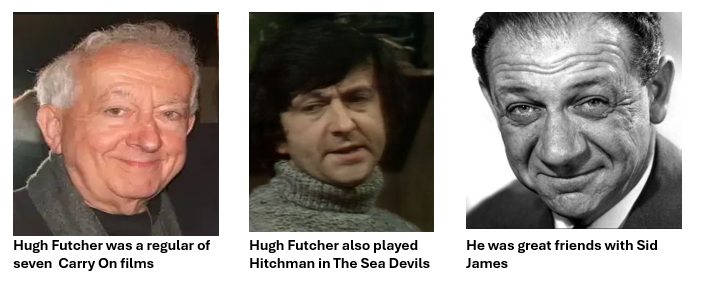
Tony Jordan uses a light touch of humour to engage his guests. When Hugh Futcher wanted to discuss a clearly fraught journey to get to the Riverside Studios, Tony Jordan deftly deflected, asking Hugh about the Carry-On Films, a cultural film phenomenon for three decades from the 1950’s to the 1970’s.
Hugh was quick to point out that he was in seven films of the franchise. Whilst Hugh played the unfortunate Hickman in The Sea Devils, he is probably most well-known as a company actor from the Carry-On films. Hugh disclosed he was very fond of fellow actor Sid James, one of the most well-known “faces” of the films. Both men found a common interest in gambling, mainly on horseracing.
The budgets, Hugh said, were particularly tight on the Carry-On films. Hugh remembered how most of the female cast would discuss how many close-ups they had, as it impacted their eventual pay. The exception, he said, was Barbara Windsor, who had no interest in the subject.
It was also revealing to hear how everyone “stood to attention” when Peter Rogers, the film producer, was on set and looking at his watch towards the end of the day. The director, Gerald Thomas, would signal if he had asked for extra time or if everything was on schedule by using a thumbs-up. Hugh remembered Sid James would give Peter Rogers a similar signal and then sometimes walk the other way. It wasn’t necessarily a sign of disrespect by Sid James, but he understood his own value as a major star of the films.
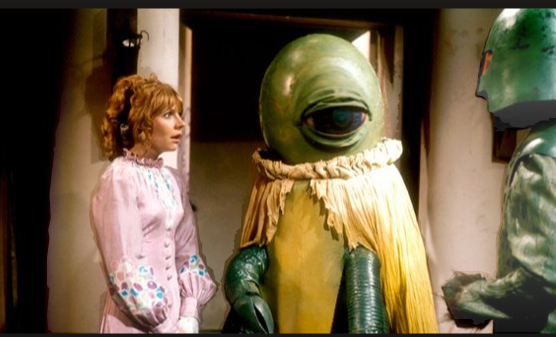
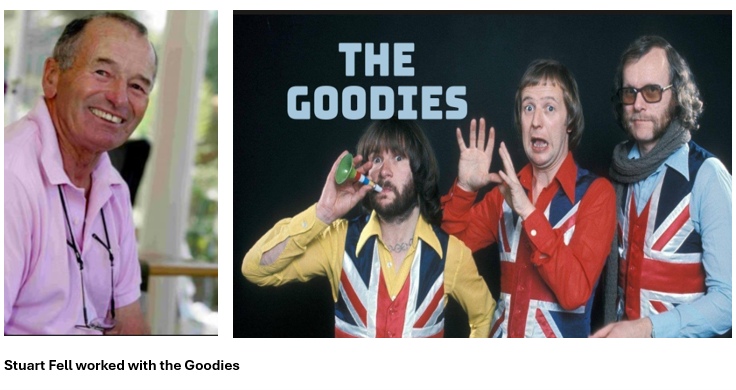
Stuart Fell is a professional actor and stuntman who has also played many monsters in Doctor Who, including Alpha Centauri in The Curse of Peladon and a Sea Devil in The Sea Devils. The role of being a monster in Doctor Who isn’t easy, he explained, but his small size made him ideal for several roles. He was able to get inside several cramped costumes and even doubled for Katy Manning and Louise Jameson.
For The Sea Devils, Stuart recalled being on location, and there is an iconic scene where the Sea Devils come out of the water. Stuart was asked by the director, Michael E Briant, to go under the water and count to thirty and then come up, but his face mask was filling with water as he came up, which made it difficult to breathe.
Stuart was also asked about the Alpha Centauri costume in The Monster of Peladon and recalled he was offered the role of wearing the costume for Alpha Centauri because, as a stuntman, he was very fit. There were instances where people would faint inside the monster costumes, and the production couldn’t afford the delays if an actor was hired and something happened.
Stuart was asked and thoroughly enjoyed the experience as he went to all the rehearsals at the North Acton “Hilton” rehearsal rooms. He revealed that he also played the Morbius monster in The Brain of Morbius and the monster Schivendal in The Ribos Operation, where he could only breathe when the mouth was open.
This was editors Martyn Day and John Slaven’s first ever Doctor Who event at Riverside Studios. Working at Group One Productions, an independent film editing company, they worked on a variety of programmes including early episodes of The Goodies and Till Death Us Do Part for the BBC. Martyn was a film editor and John an assistant film editor and they worked on nine Doctor Who stories between them, The Mind Robber, The Invasion, The Krotons, The Seeds of Death, The Space Pirates, Inferno, The Curse of Peladon, The Sea Devils and The Time Monster.
Asked about the film editing process, Martyn Day revealed, humorously, as “masters of time and space”, a morning of filming would be edited to approximately three minutes, as in a scene from the episode of The Sea Devils where the 3rd Doctor and Jo are crossing a minefield. John Slaven expanded on the process that they would receive the rushes (the film and sound were separate), and his job would be to sync them up. Martyn would then receive a shooting order from the director, Michael E Briant, showing all the shots needed and then add the relevant explosions.
John Slaven also recalled that with a scene on location with the diving bell, the director Briant was using cinefilm and realised there wasn’t enough time to reload, so the film was kept running with gaps of black areas. They then had to synch up the film precisely a few weeks later with the studio scenes, which were governed by the precise length of the roll of film which had to be kept running during filming.
Both Martyn Day and John Slaven talked about the more physical aspects and the process of managing 16mm film. The process was slower as they had to cut film, but it was accessible, easy to use, and they were both aware that directors such as Michael E Briant and Douglas Camfield wanted to create pace and punchiness using film. John Slaven said it allowed a “fluidity” to the more digital effects available nowadays.
John and Martyn noted that with the colour change, they did move to 35mm film, which they felt was more demanding. As an example, Martyn talked about the colour balance required between scene transitions, so colours stayed consistent, to ensure there wasn’t “jarring” between scenes for the viewer. This required the services of a colourist to check the film during production. However, Martyn felt black and white film, even with the lower definition of 16mm film, was far more forgiving.
Anecdotes from the Guests
Hugh didn’t have many memories of The Sea Devils, but did reveal an intriguing snippet that he was once in the running to be the Doctor. However, which Doctor he went to, he didn’t say, although he did mention a long scarf!
Stuart Fell also worked as a stuntman on the situational comedy series The Goodies, which ran from 1978 to 1982. The Goodies were a trio of British comedians, Tim Brooke-Taylor, Graeme Garden and Bill Oddie, who created comedy sketches and filmed for the series, which meant Stuart travelled all over the country. Stuart noted humorously that the places they went coincided with where Bill Oddie, who was a keen twitcher, could also bird watch!
Q&A Session Two Highlights
Following the screening of the episodes of The Mutants and The Time Monster, the second panel of guests joined the stage to be interviewed by Robert Dick.
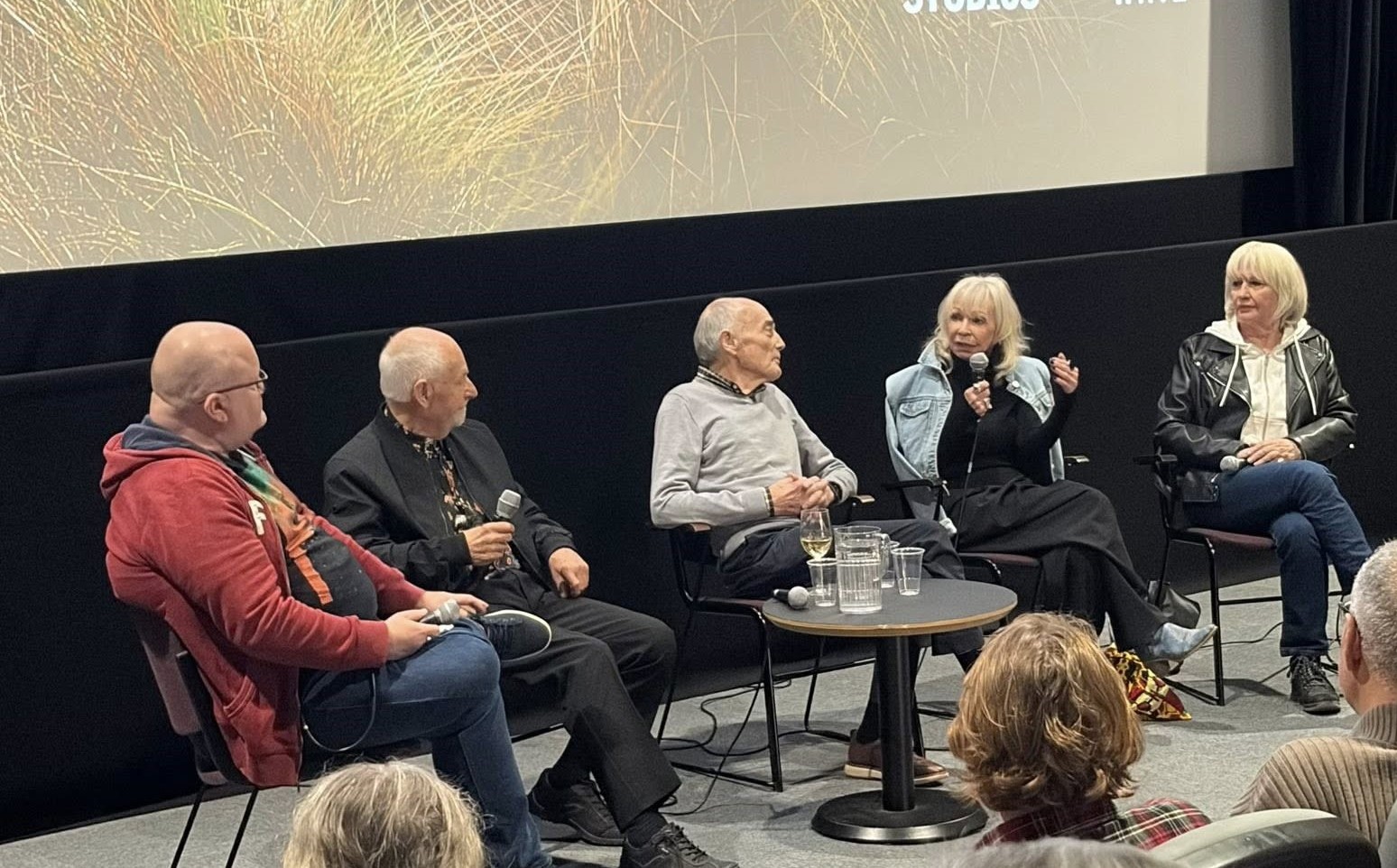
Robert Dick started the interview by asking how the guests started their careers. Jeremy Bear explained he was a designer who started in exhibition design and then moved into television and film design. He designed for The Mutants. However, the earliest Doctor Who serial he was involved in was the William Hartnell story The Savages.
Garrick Hagon is a British Canadian actor who played the rebel leader Ky in The Mutants. He knew he wanted to act and started very young as an actor in theatre in a repertory company in Canada as a way of getting some experience. He has been lucky to have a transatlantic career, as before coming into Doctor Who, Garrick had completed a film, Antony and Cleopatra (1972) with Charlton Heston. He loved doing Doctor Who due to the quality of the script and enjoyed working at Chislehurst Caves, where Katy Manning reminded him still had props left there from the original production.
Katy Manning, of course, played popular companion Jo Grant with Jon Pertwee’s doctor and described her journey to the role. Katy loves doing voice work partly due to being severely myopic and teased by other children for wearing “big specs”, and she decided to audition for the Webber Douglas Academy of Dramatic Art. This was after deciding on the advice of her father not to be tied to a long film contract whilst acting and living in New York for a time with her sister.
Susan Penhaligon was also at Webber Douglas Academy of Dramatic Art, and they became friends. Katy went straight into television after her graduation and had a couple of short roles before securing the role of Jo Grant in Doctor Who.
Susan Penhaligon played Lakis in The Time Monster, and Susan was very grateful for the role, as it opened the door for her to play many other parts. With her blond locks, she became known as the British Bardot. Susan is probably best remembered for starring in the TV series A Bouquet of Barbed Wire a few years later.
The 1970’s were different, however to today’s social media times and for working actors, there wasn’t that general awareness of fame. Both Katy and Susan Penhaligon commented on their naivete of becoming a part of popular TV shows and the realisation that they would be recognised once the shows aired.
Anecdotes from the Guests
Susan revealed that she had auditioned for the part of Sarah Jane Smith, and it’s interesting to speculate what a different interpretation we could have had if she had been successful.
Photos and Autographs
In between the screenings and question-and-answer sessions, there were opportunities for photographs and autographs and a perfect opportunity to chat to the guests and make your own memories, which is such a lovely thing.
Another really fantastic event at the Riverside Studios from the DWAS! What are your thoughts on season nine? Post your thoughts here or on X. Let’s talk!




Comments
No one has left a comment yet.
Be the first and get the conversation going.