

The Ark Screening at Riverside Studios with Live Q&A Review
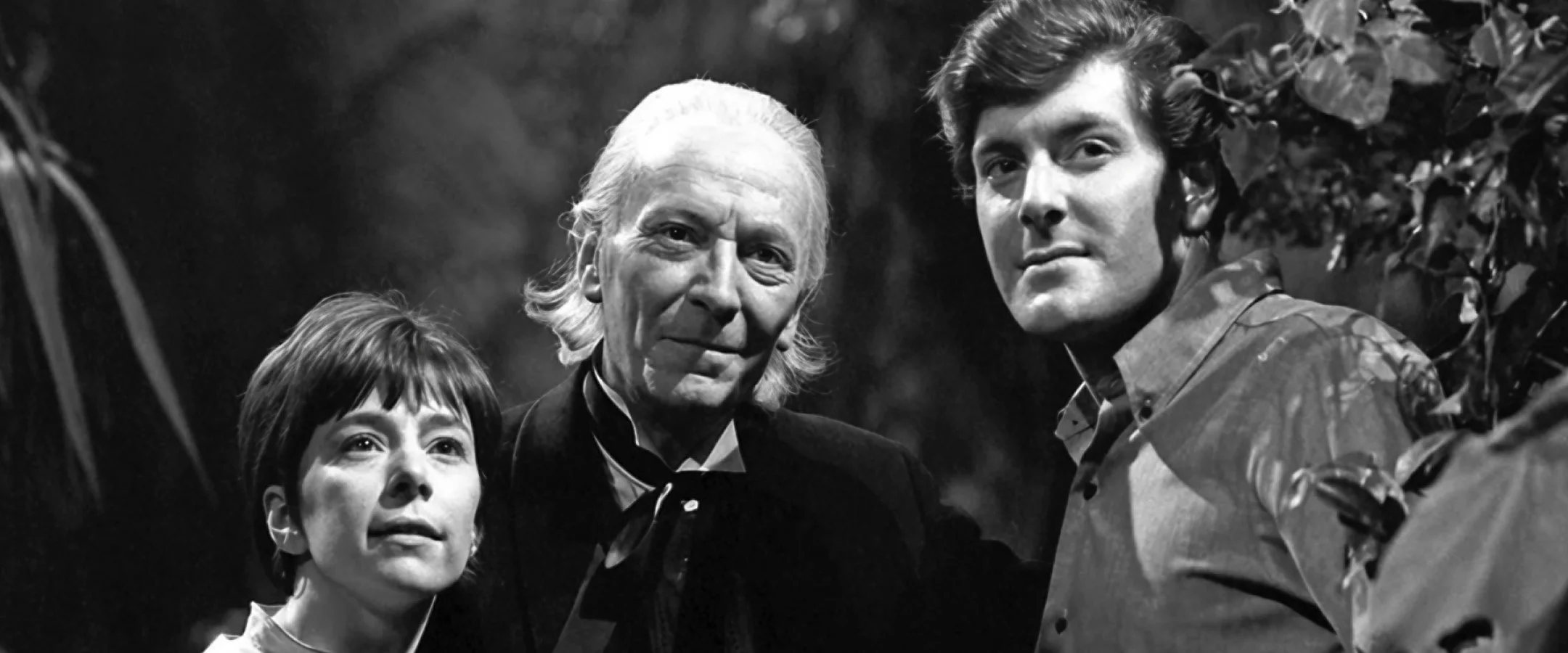
Riverside Studios in West London has a significant production history with Doctor Who. It was bought by the BBC in 1954, and between 1964 and 1968, twenty Doctor Who stories from the William Hartnell and Patrick Troughton era were filmed there. Now, as an arts centre and theatre/cinema location, it should celebrate its past. Riverside Studios hosted a Doctor Who screening of The Ark, which was filmed at Riverside Studios in Studio 1 on the 18th,25th Feb 4th,11th Mar 1966 and also at Ealing Film Studios on the 24th,31st Jan,1st-3rd Feb 1966.
Two Doctor Who writers introduced the showcase, providing a brief watcher’s guide to each episode and a discussion afterwards before introducing the next episode. Gavin Rymill is a writer, researcher and digital illustrator who has worked for Doctor Who Magazine as a feature writer and illustrator covering the Evolution of the Cybermen. James Goss is familiar to fans as a writer of several Doctor Who books and also produced the animations of two missing episodes of The Invasion developed by Cosgrove Hall.
The Ark: Episode 1: The Steel Sky (Originally broadcast 5th March 1966) Review
The Doctor, Steven and Dodo arrive on a giant spaceship millions of years in the future, transporting the last humans away from the doomed Earth.
Now I do have a bit of a soft spot for The Ark. The costumes for the humans are highly impractical tunics of course as happens regularly in this era, but the story just wins me over. The Ark recreates a jungle in the studio with a live elephant and other zoo creatures, which is so evocative. The shots with the elephant and other animals were filmed in advance of the studio work at Riverside Studios, with a few days of filming at Ealing Film Studios. We have a new cheeky companion in Dodo, not aware of the rules of travelling in the Tardis, which Steven tries to teach her, who is convinced they are on Earth at “Whipsnade Zoo”.
It’s such a great opening to have a companion exit the Tardis first and explore. Gavin Rymill pointed out an interesting moment to look for when William Hartnell first appears from the Tardis. Hartnell waits for his cue and lingers a bit too long before coming out as the camera pans across to him.
This is season 3 of Doctor Who, which has those great sparks of 1960s Doctor Who ambition in direction and effects. The story was directed by Michael Imison, and Gavin Rymill started the event by explaining with slides how the high shots in episode 1 were achieved. A camera platform was using a scaffolding rig where a studio camera was hoisted upwards to the platform. This allowed for high shots looking into the jungle, the Tardis and the Ark control room. The studio space of Riverside Studio 2 was actually very small, so fitting in all the various sets was tight.
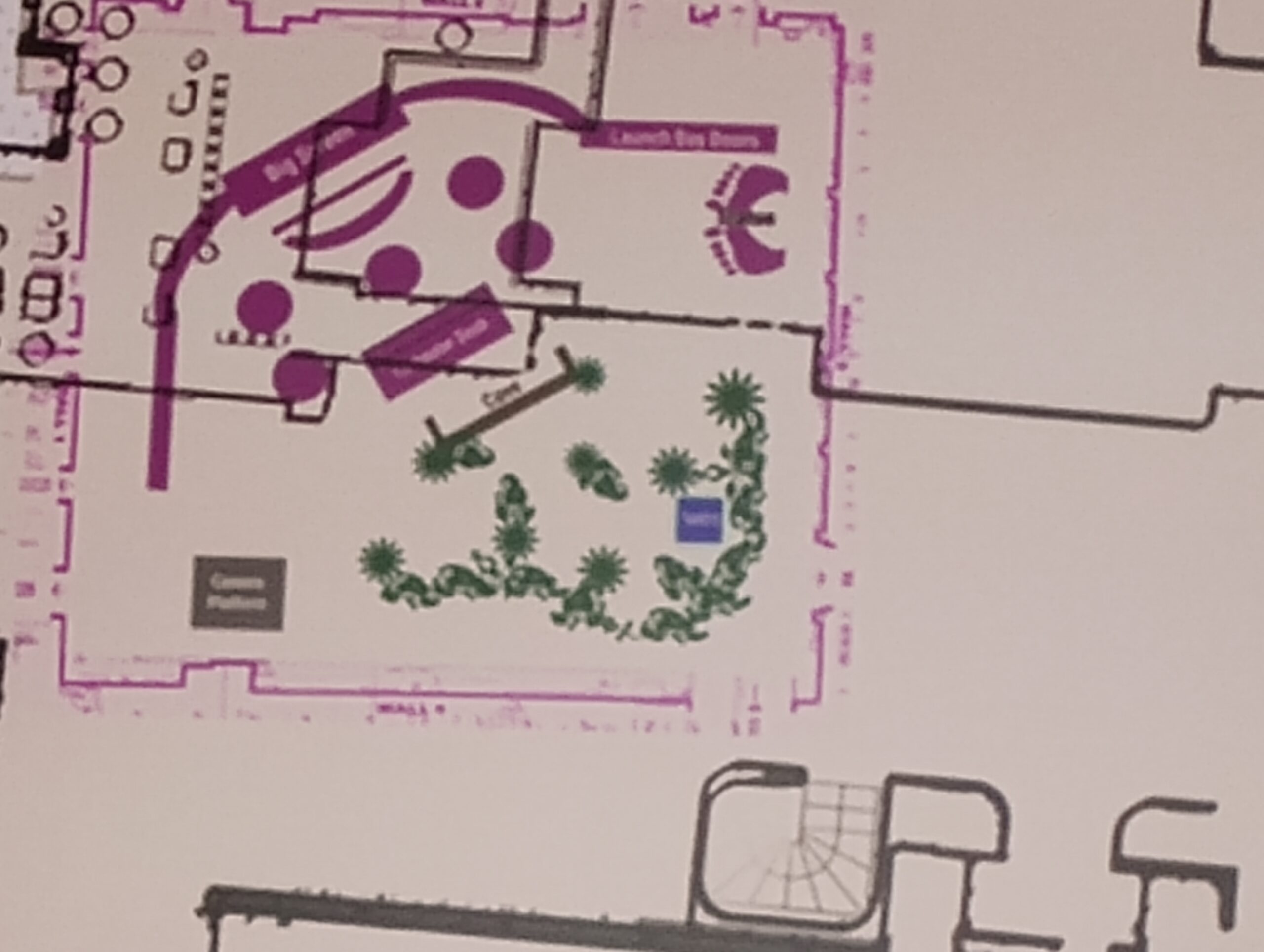
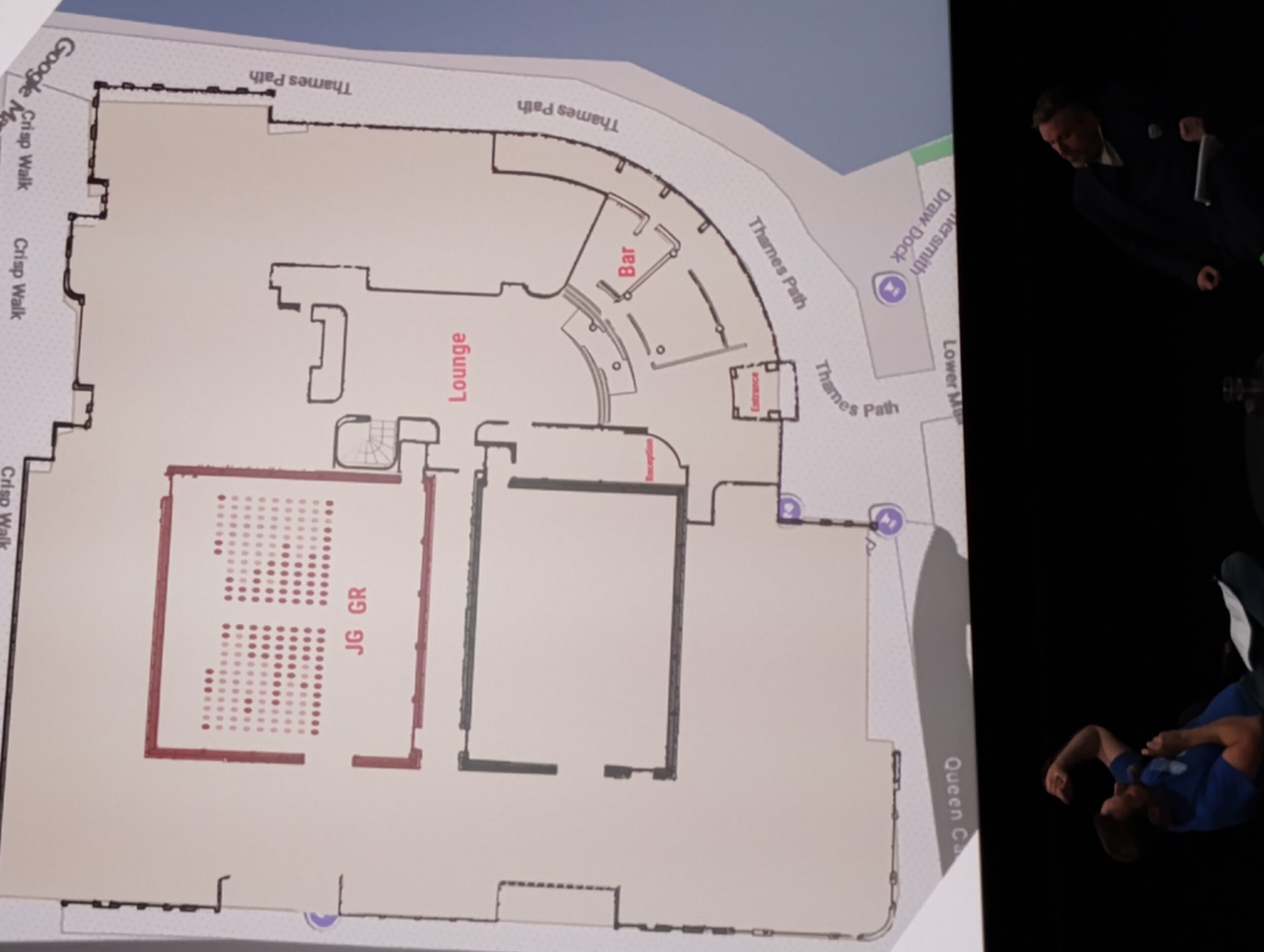

The loading bay doors in the story were built in front of the scenery dressers’ areas, which allowed a buggy used in the story to be driven in and out. Gavin Rymill wryly commented on the disposal of the first Monoid to die from the virus, who was disposed of into space. He wondered about the fate of the buggy driver, also a Monoid, as the doors to the disposal area came down. Did he also disappear into space? The story also uses some interesting video inlay effects with a shrinking man and also the big screen in the control room, so it pushes the effects of what can be achieved.
The Ark: Episode 2: The Plague (Originally broadcast 12th March 1966) Review
With the Ark infected with a cold virus, the Doctor must convince the Guardians to trust him so he can find a cure.
Dodo’s accent varies in this story from quite posh to a northern accent when she has a cold. There is an interesting story that Dodo was once also described as a cockney, which was incorrect, but traced to editor Jeremy Bentham writing for the Doctor Who Appreciation Society in 1977, which was then repeated in Doctor Who Weekly magazine issue 18 and stuck.
This story has the Monoids, who have a fascinating, I feel wilder beast fringe around their faces and a mono eyeball. Gavin Rymill made what is probably my favourite observation that there are clues to the speed of the evolution of the Monoids with the cave drawings the Tardis crew find in episode 1, and the strange grunting noises they hear when the Monoids are together and the Tardis crew is hiding in the cave.
In Episode 2, the Monoids hold a funeral ritual and play drums during the progression. Dodo calls them savages, but as Gavin observes, there is a two-tier society being seeded within the story. There is also an element of colonisation shown where the Monoids are the servants of the humans.
Fun facts to note. The Monoids’ costume zips are fairly noticeable in the episode. This episode also featured the first appearance of Michael Sheard as the character Rhos. This actor was in six episodes of Doctor Who in total over the years. Michael Sheard has to be quite athletic in this episode. The Doctor is talking to Rhos in one room and a few seconds later has sprinted across the studio to be hitting his mark in another scene in a different room, giving the illusion that time has passed

The Ark: Episode 3: The Return (Originally broadcast 19th March 1966) Review
The Doctor, Steven and Dodo have travelled 700 years into the future and find that the Ark is now under the control of the Monoids as it approaches Refusis.
In episode three, James Goss reflected on the clear implication that this may be the first time it is acknowledged that the Tardis crew being there on the ship has caused all of the subsequent events. Gavin Rymill pushed back with the Doctor’s dishonesty in The Daleks over the fluid link that led to the events on Skaro. I rather like the exploration of the impact of the Doctor going somewhere.

As the Ark arrives at its destination, the Monoid leader assembles a landing party to Refusis II and James Goss joked that Refusis II was dressed in whatever the design people could find, so it looked like a castle dressed as a bordello!
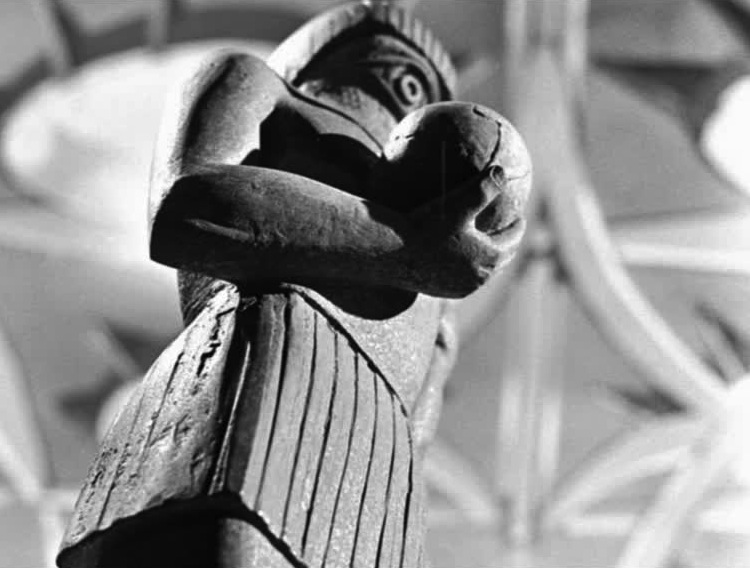
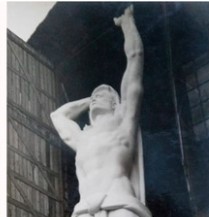
Whilst travelling to their destination, the humans were creating a gigantic statue of a human, but the Tardis crew discovered the statue was complete with a Monoid head. The design of the statue was similar to a statue called the Colossus of Fascism, also known as the Colossus of Mussolini, which was a monumental statue designed to embody the ideals of early 1930s fascism and Benito Mussolini’s regime in Italy.
Fun facts from James Goss are at 3 minutes 19 seconds into this episode, in the far left of a group shot of the Tardis crew talking to one of the Monoids, two people pop up from behind a desk and move slowly out of shot. The downfall of live recording! Another thing to notice is that Roy Skelton and John Halstead are voicing the Monoids, and there are moments when you can hear their faint voices from the gallery or studio they are in before the modulated Monoid voices
The Ark: Episode 4: The Bomb (Originally broadcast 26th March 1966)
The Monoids abandon the Ark, leaving Steven and the Guardians to die, but a mutiny in their ranks may give the Doctor a chance to bring about peace.
Episode four for me is probably the weakest with the backstabbing Monoids at civil war, the attempt to find the bomb and the invisible alien helping the humans. It’s all a little rushed to conclude compared with the first two episodes, which built up some of the original Guardian characters and the discovery in episode three that the Monoids are in charge. But as Gavin Rymill notes, there is some great use of model work when blowing up the statue and switching between the full-size prop and then model work. James Goss highlighted that the final episode is shot mostly out of order, as the production team had only one size shuttle prop, so it was edited later between the video and film work.
Fun facts from Gavin Rymill for this episode: there is a huge battle between the Monoids in the jungle pre-filmed at Ealing Studios, so there is faster editing, better shots and the appearance of rock formations which aren’t seen elsewhere. Also, in the final scene, the Tardis floor is textured as a jungle floor, as it was shot first and could then be moved off the set, and other scenes finished.
In Conclusion
This was a fun and relaxing event for a story that probably isn’t regarded as a classic, but I do enjoy The Ark. It has ambition and attempts something new in direction and special effects. The story is interesting for the ideas it brings, although the obsession with invisible monsters, which was a feature of the John Wiles era, feels very of its time. These screenings run every few months. Which story will be next? Riverside Studios also runs Doctor Who events in conjunction with the DWAS (Doctor Who Appreciation Society).
Check out their website, West London Theatre & Cinema | Riverside Studios, for upcoming events.




Comments
No one has left a comment yet.
Be the first and get the conversation going.