

Riverside Studios Dalek Showcase Screening Review
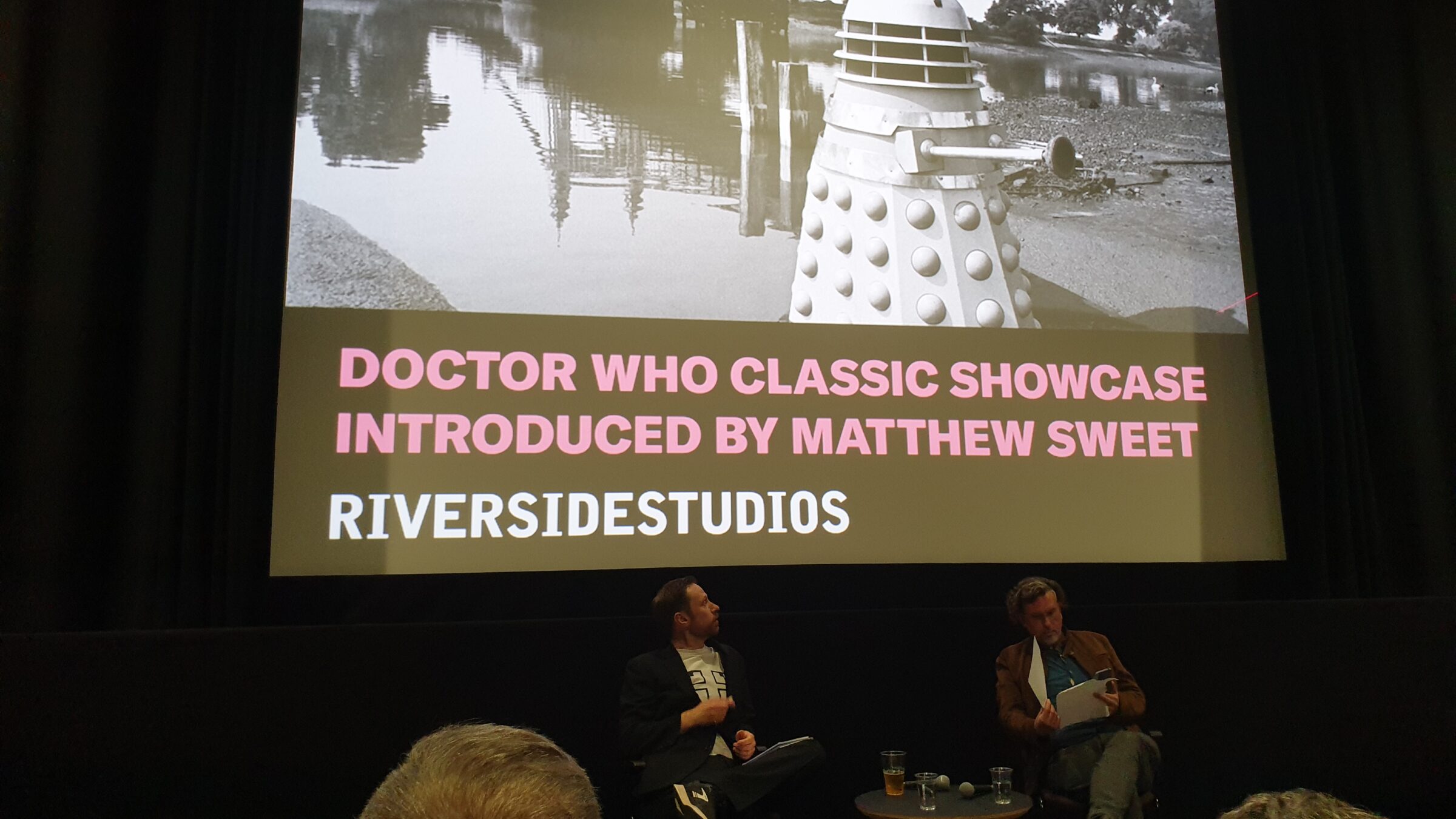
Riverside Studios in West London has a production history with Doctor Who. It was bought by the BBC in 1954 and between 1964 and 1968 twenty Doctor Who stories from the William Hartnell and Patrick Troughton era were filmed there. The Daleks were a huge part of its tenure as a BBC filming centre. Now as an arts centre and theatre/cinema venue, it seems fitting that it celebrates its past. Riverside Studios brought another Doctor Who showcase this month, including episodes filmed at the studios that concentrated on the popular metal meanies.
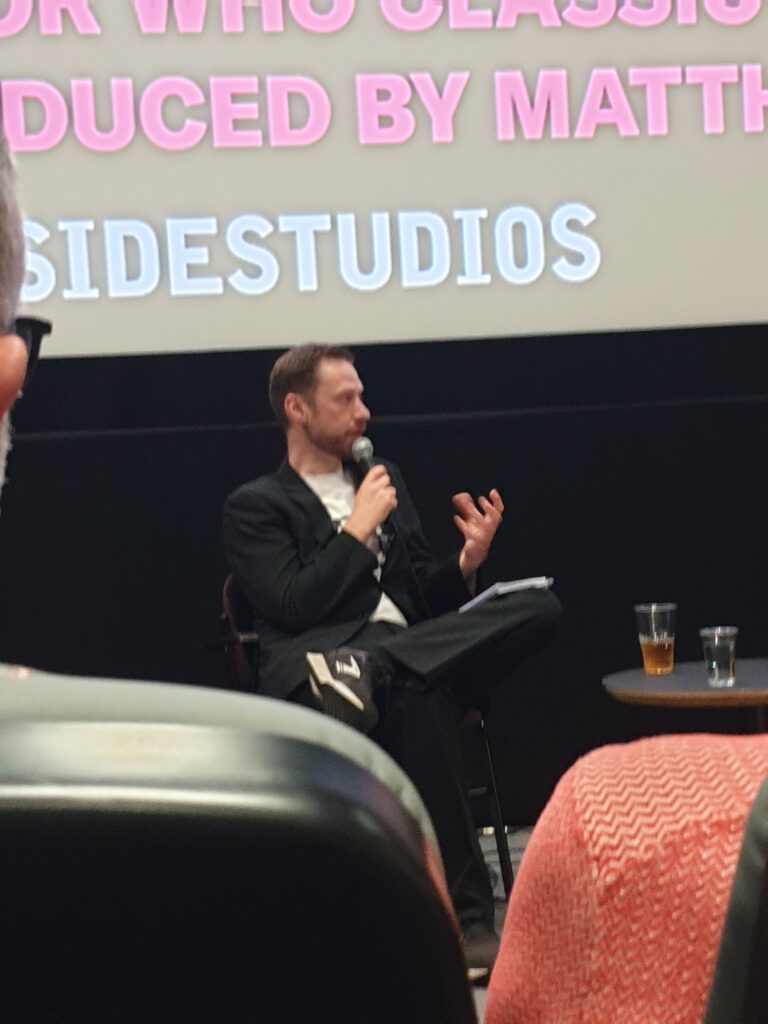
Two Doctor Who writers were there in the showcase to introduce each episode, providing a brief watcher’s guide, then a discussion afterwards before introducing the next episode, Gavin Rymill is a writer, “Dalek” researcher and digital creator who has worked on the Doctor Who range for nearly 20 years. He sculpted seventy monsters for the figurine collection, illustrated the TARDIS and Dalek manuals and built sets and props for The Evil of the Daleks animation. James Goss is familiar to fans as has written a number of Doctor Who books, but also produced the animations of two missing episodes of The Invasion which were developed by Cosgrove Hall. He also produces audio dramas for Big Finish.
Reviewing The Dalek Invasion of Earth – Episode 6 Flashpoint (Originally transmitted 1964-26th December Transmission)
Gavin Rymill revealed this was the first story to reveal a variation in the Daleks. The designer was Spencer Chapman and as an assistant to Ray Cusick, he was tasked with finding a way for the Daleks to move on location. They had larger rubber wheels and a bigger fender which made them taller but they also needed more room to manoeuvre. They also lengthened the eye stalk on the taller Daleks.
Two Dalek props which had been in the first Dalek story were also borrowed back from children’s charity Dr Barnando’s. They had a wooden block nailed on where the neck had been broken by children. Spencer Chapman also added to all the Daleks a disc at the back where a line in the David Whittaker script said they gained solar energy. This print also
This is the final episode and ends a cracking story. Seeing the episode on the big screen was great. This story has a scope which I haven’t noticed since Marco Polo. I love some of the on-location direction from Richard Martin. He uses unusual angles, and shots to create pace and feeling. When the Roboman turns on the Daleks and prisoners start pouring out of the tunnel attacking and destroying Daleks it’s such as great long shot. Seeing the quickly developing relationship between Susan with David again feels emotional as I’m aware of what’s coming.
The Doctor decided for Susan and said goodbye to her, It’s a lump in my throat moment which you can appreciate after watching 5 episodes. I forgot Susan was partly barefoot and seeing her reach out to the space where the Tardis was moments ago and then drop the Tardis key felt more impactful on the big screen. Moving for what isn’t said – the first and probably most important goodbye for both of them.

Reviewing The Chase -Episode 6 The Planet of Decision (Originally transmitted 26th June 1965 Transmission)
James Goss summarised the story so far and Gavin Rymill gave some details about the Terry Nation script. Also directed by Richard Martin this story sees the introduction of new monsters the Mechonoids, Terry Nation wanted a robotic society of Mechonoids so scripted two types, A tall lightbulb robot and a smaller cleaning robot. Built by Shawcraft Models they were very expensive to make but only appear minimally so were not considered successful.
Ray Cusick looked at the Daleks and decided to replace the solar disc added by Spencer Chapman so added slats to the shoulders of the Daleks as solar catchers He also replaced the “ping pong” design lights on the Daleks to a miniature bell jar design. Gavin Rymill highlighted a camera blooper where when the main cast is climbing down the rope from the roof and as William Hartnell comes off the rope at the bottom, the camera pans upwards, and William Russell can be seen being lowered down the rope but who is doing it.
This is the final episode with the Tardis crew caught by the Mechonoids in their city and imprisoned with Steven Taylor. The highlights are the introduction of Steven and the departure of Wiliam Russell and Jacqueline Hill. I rather love the idea that Steven goes back to his cell for his mascot. The ending as Barbara and Ian return to London I love so much. They are a class act together and seeing their joy at being back in 1965 was wonderful
Reviewing Death to the Daleks Episode 4 (Originally transmitted 1974-16th March 1974 Transmission)
Gavin Rymill highlighted the cliffhanger opening to this episode which isn’t really as the actors are looking at the city’s floor trap, which the viewer doesn’t even know is a trap yet! This was due to episode four overrunning, so part of the action was put into episode three and it didn’t work.It was also acknowledged that Arnold Yarrow who played Exxilon leader Bellal is still alive at 103 years old. The other thing he noted was the sound of voices at the beginning which can occur when you get a magnetic reel that is spooled very tightly and one rotation will imprint onto the next layer which is known as “print through” Sometimes there is an echo of something coming up
Personally, I do have very fond memories of this story being one of the first Pertwee stories I brought on VHS tape. We’re in colour and there’s quite a lot going on in the story with the Exillon’s human sacrifice, the tensions in the Marine Corps group to get the drug they need and the arrival of the Daleks. The location filming for the story looks impressive for a quarry. The planet seems large & real and there is something cinematic about the colours. Matt’s silver Daleks and the blue uniforms of the Earth mission crew against the sandy background. When the Dalek is attacked by the root coming up from the water that is really nice to look at.
I love that Michael Briant uses point-of-view shots. It’s unusual but makes scenes seem more alive. Love the fading when Hamilton shows the Doctor the maps of the city to Sarah and the eerie score for the city. Wished they had used that more instead of the half-jokey music for the Daleks in the city. Episode 4 in some ways feels the weakest of all the episodes with the relatively easy destruction of the city and the tests are a bit unimaginative. Although Pertwee seems very in control as the Doctor he and Bellal work through the city. The incidental music from Carey Blyton works most of the time for me and is effective for the screams of the city at the end.
In a final section, James Goss and Gavin Rymill covered the fates of some of the Dalek props and if any have lasted. Gavin revealed that of four original Daleks made in 1963. The top half of one Dalek remains which was used up until Remembrance of the Daleks which is paired with a skirt bottom half almost as old. It is owned by a private collector. Of the two Barnardos Daleks, there is a bit of a mystery. They were known to exist up to 1967 and the story is told that one Dalek prop was left in a stairwell at one of the Barnardo’s homes and one day disappeared so much like the missing episodes could be out there somewhere…
After the success of the 60th-anniversary events, Riverside Studios is teaming up with the DWAS (Doctor Who Appreciation Society) again on Sunday 30th June for a new screening of Doctor Who: Projections In Time – Season Sevateem | Riverside Studios. Tickets are selling out so grab them while you can!


Comments
No one has left a comment yet.
Be the first and get the conversation going.