

Riverside Studios The War Machines Screening with Live Q&A Review
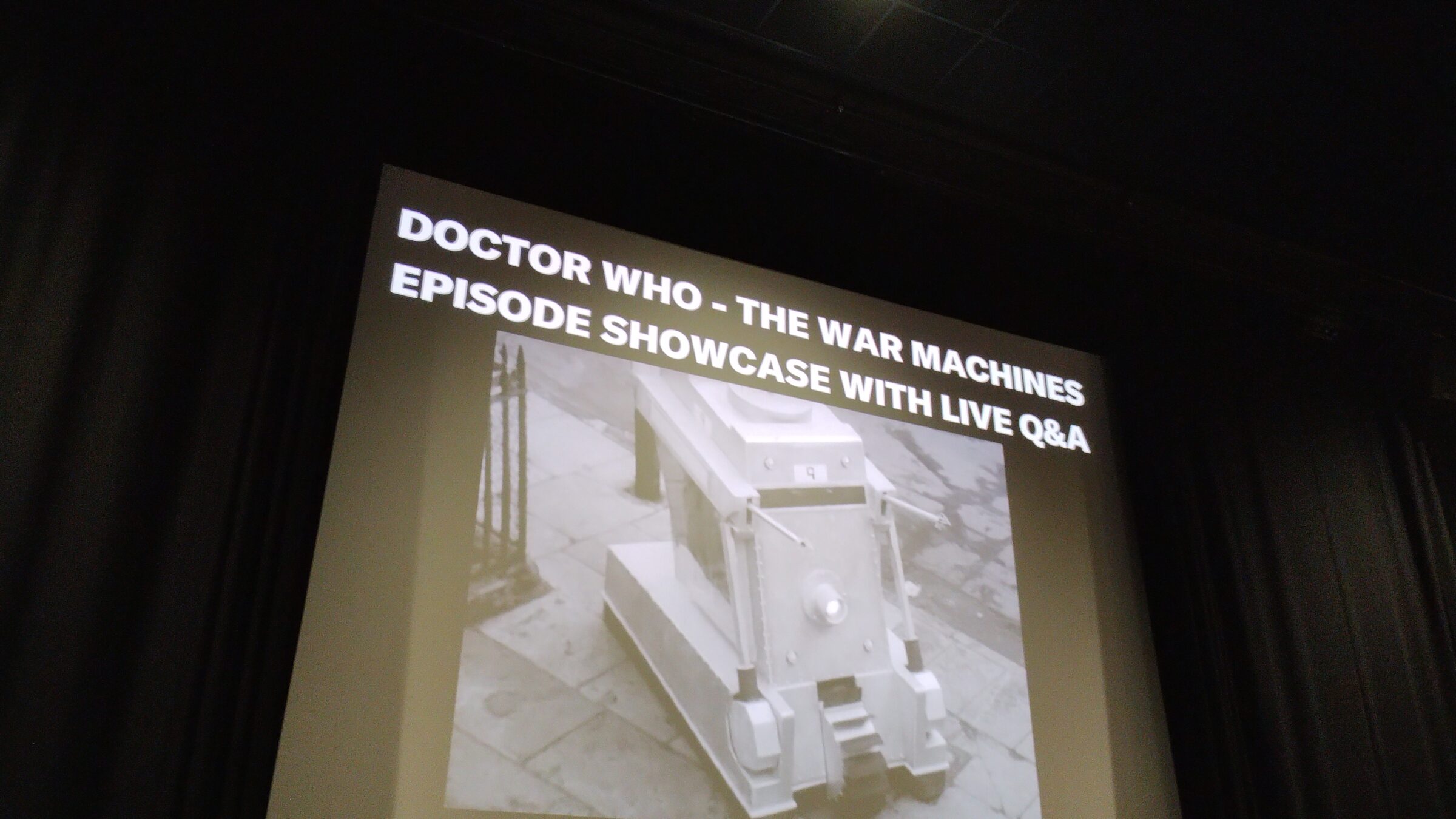
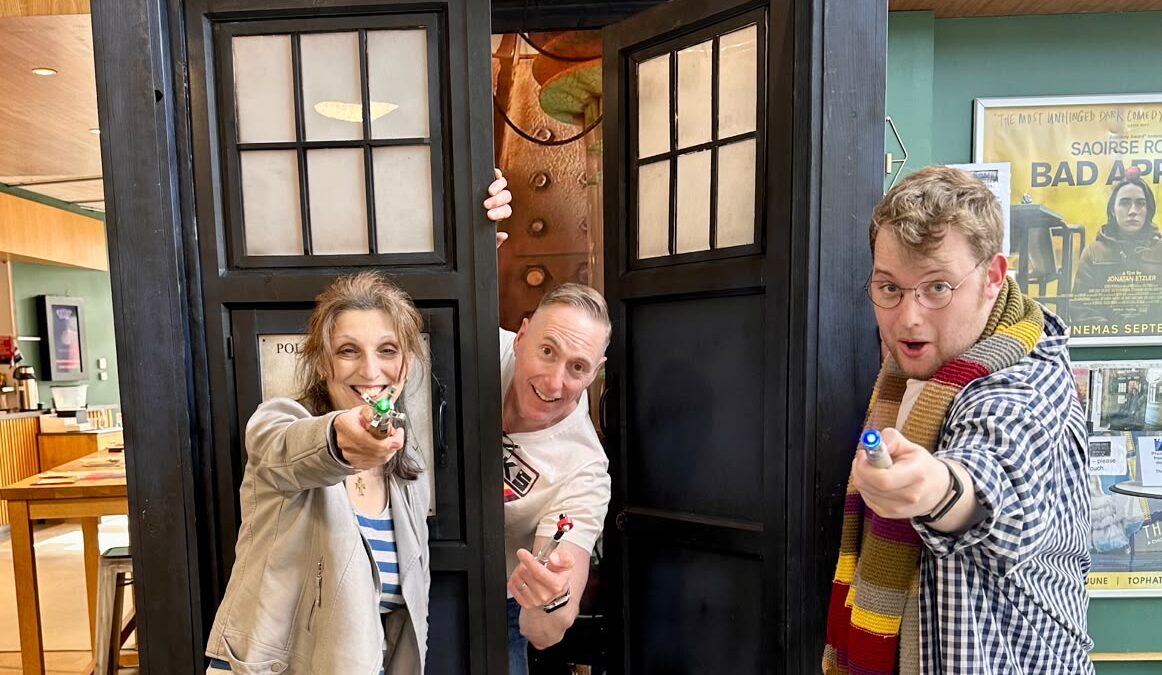
Doctor Who is required!!!!! I recently travelled the London underground to West London’s Riverside Studios, which hosted a screening of the first Doctor story, The War Machines. It was written by Ian Stuart Black, who also wrote the missing The Savages and The Macra Terror. As with a couple of previous events, there was commentary in between from the two writers Gavin Rymill and James Goss. Both are familiar names to Doctor Who as writers of several Doctor Who books, providing a humorous watcher’s guide and introduction to each episode.
These screenings are a relaxed affair and there is something really enjoyable about sitting in a dark theatre watching black and white Doctor Who prints that probably haven’t been played for at least thirty years. It’s a slice of history and at this point, if you are interested in the minutiae of the story I would encourage you to listen to as an aperitif to the frankly excellent podcast Doctor Who: The Missing Episodes Podcast – Episode 13 – The War Machines The War Machines isn’t missing. All four episodes do exist however the story of where the different episodes came from and the practices of the BBC in the 1960’s selling Doctor Who and Hartnell stories overseas is a fascinating account. An account which enabled the recovery of this firm favourite by fan Ian Levine.
Reviewing The War Machines Episode 1 (Originally transmitted 25th June 1966)
For episode one The TARDIS lands in London, near the Post Office Tower, where the Doctor and Dodo meet Professor Brett, the creator of WOTAN, (pronounced as Votan) a supercomputer which will be linked to other major computers. Polly, Brett’s secretary takes Dodo to the Inferno nightclub, where they meet a sailor Ben Jackson. The Doctor attends a Royal Scientific Club meeting about WOTAN, led by Sir Charles Summer. Sir Charles is played by William Mervyn and his son Michael Pickwoad in 2010 became the production designer on Doctor Who and worked on 11th and 12th Doctor stories including A Christmas Carol amongst others.
James Goss started the introduction to episode one revealing that a celebrity guest Sir Timothy Berners-Lee the English computer scientist known as the inventor of the World Wide Web, had watched the story a few years ago at his behest. Sir Timothy was amused to see the WOTAN communicate over phone wires, sounding very like modems of the day, and also communicating with people with the same sounds. Sir Tim stated that he remained a huge fan of Doctor Who.
Although the theme of the episode was singularity of course. It occurs to me how much we under estimated how long it would take to build machines that would be able to do AI like speech and vision and how we may be over-estimating how long it will take to build something we cannot control…
Comments from Sir Timothy Berners-Lee
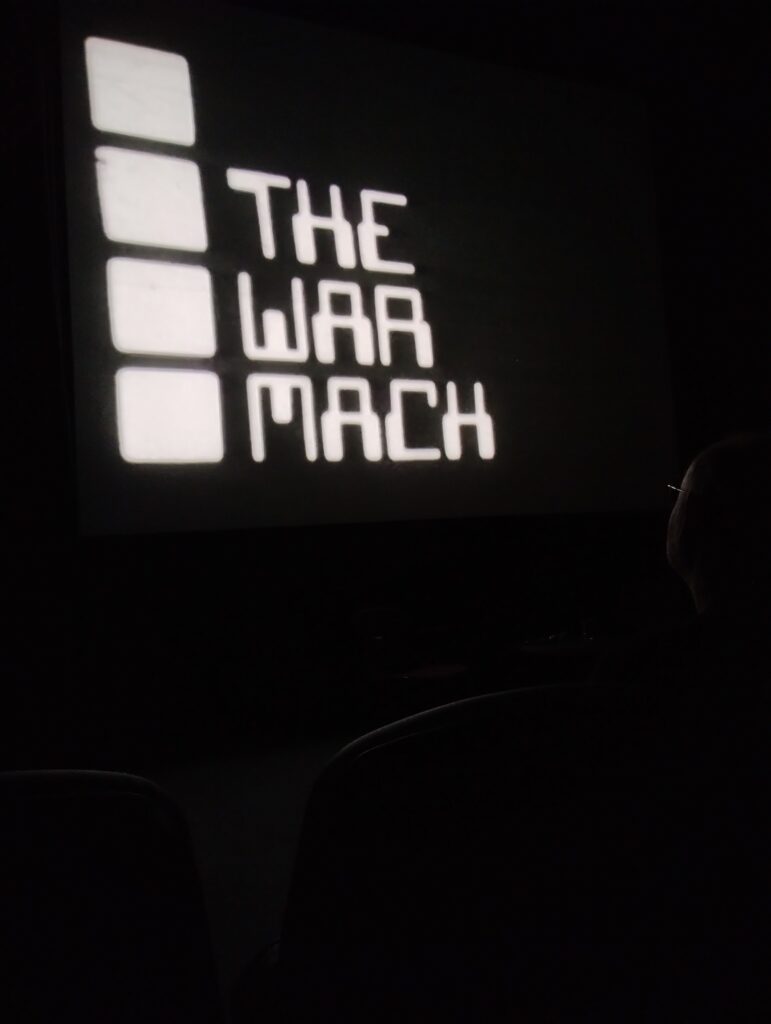
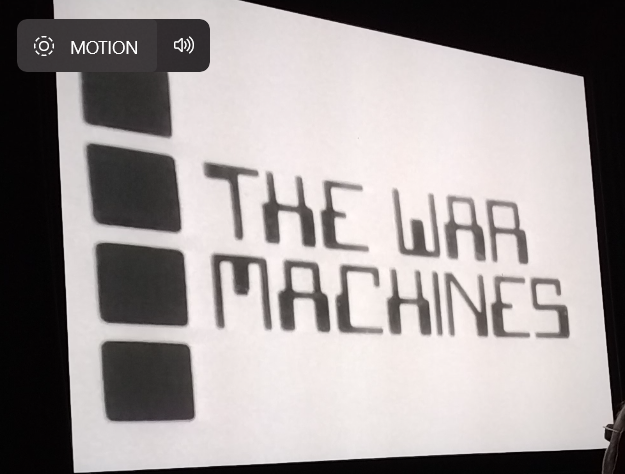
James Goss revealed this story was one of the first from producer Innes Lloyd bringing in a new style. This was one of the first stories to have title cards by Bernard Lodge. In An Unearthly Child when the Tardis left 1963 it was shown zooming out and in a nice touch for the Tardis returning to contemporary Earth the Tardis is shown in The War Machines zooming in to land.
A fun fact Gavin Rymill gave was about the line from Dodo after the policeman sees the out-of-order sign on the Tardis and walks away not able to get in “If only he could. Scotland Yard whipped off into time and space”. This line was a production in-joke about the release of the Dalek film: Dalek Invasion Earth 2150AD a month or so later starring Bernard Cribbens as a policeman whisked off in time and space. Referencing always seems a Nu Who thing but how brilliant is that?

Gavin Rymill commented how the modern London 1966 setting for The War Machines detailing normal people seemed “weird” but it’s a template for more stories to come. I’m sure this comment was in jest however, by season three it is noticeable how the production team are stretching their creativity of the show which is fantastic. Over half the stories of the season are set in the future on distant planets and three historical stories are shown which are so different from each other in tone. Following all these adventures I think it’s refreshing to have a story set in the present day.
Episode 1 for me is a standout episode. There’s an energy to it with the introduction of new companions Polly and Ben (in their only complete adventure held in the BBC archive, unfortunately).
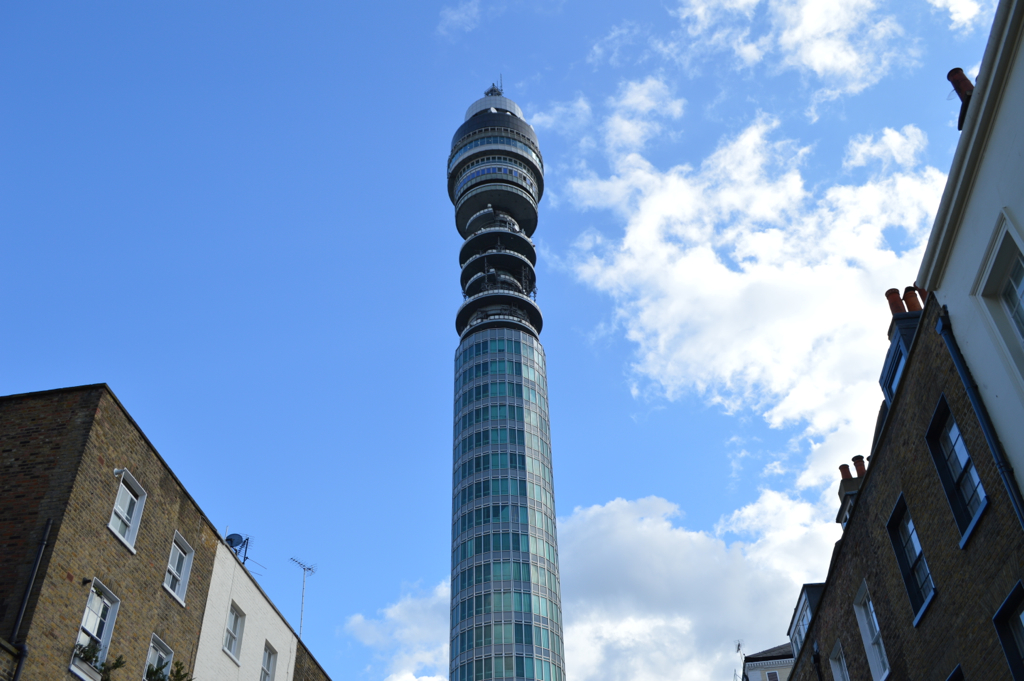
Seeing parts of swinging 60’s London and the beautiful, as it was called then, Post Office Tower. It’s a stunning piece of architecture on the London skyline so I always have a soft spot for this story.
The first Doctor states that when they arrive in London he has a pricking sensation on his skin as when he saw the Daleks and both writers Gavin Rymill and James Goss. put forward the proposal that The War Machines, The Faceless Ones and Evil of the Daleks all take place on the same day so the 1st Doctor is sensing the Daleks. It’s not a theory I’ve heard before but it’s interesting. How does WOTAN know about the Tardis? It’s because he has been eavesdropping on conversations to take the Tardis way from Gatwick Airport in The Faceless Ones and Evil of the Daleks. Very timey-wimey indeed as Steven Moffat might say.
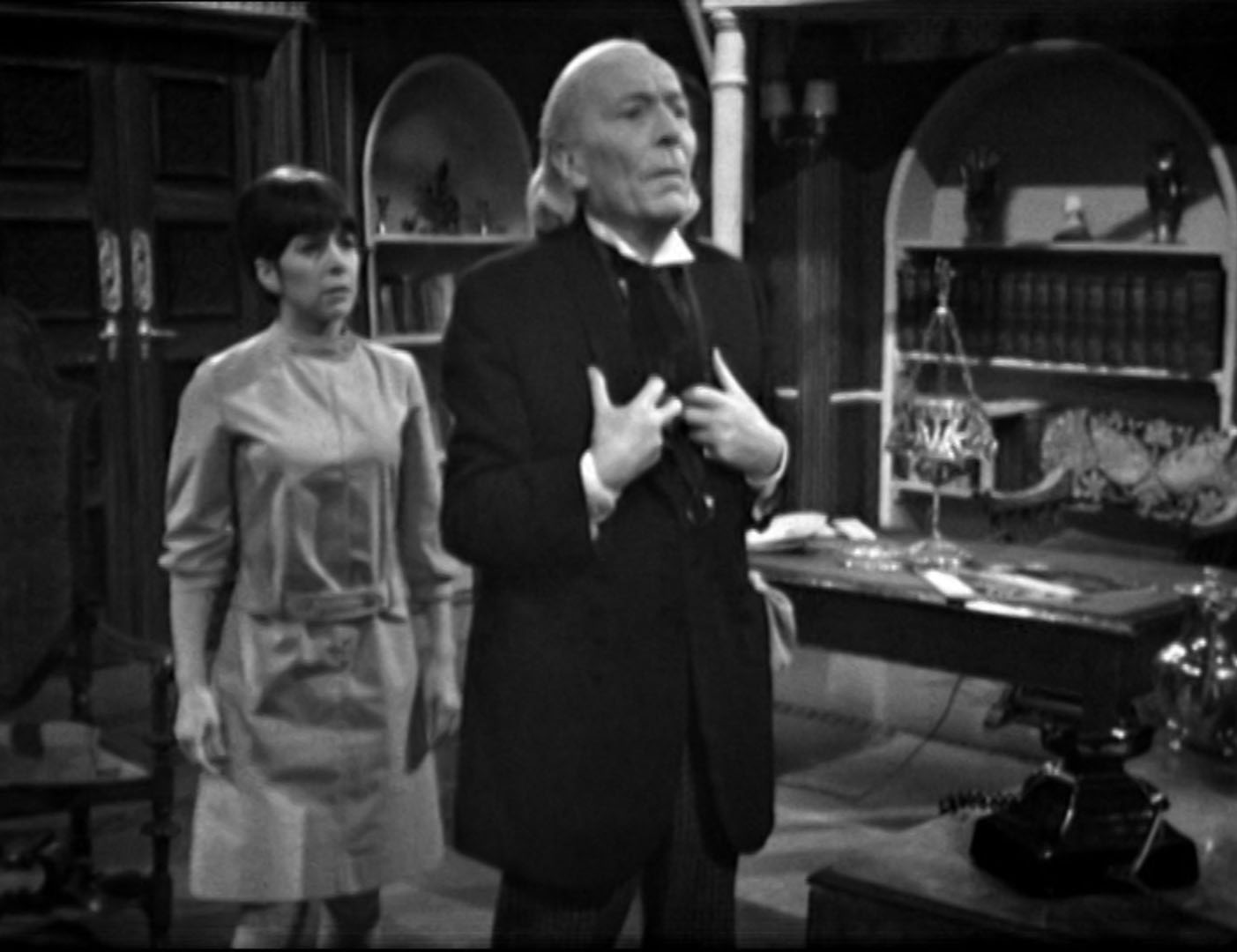
I can feel it’s got something sort of powerful. It’s. Look at my skin. Look at that. I’ve got that pricking sensation again, the same. Just as I had when I saw the Daleks, those Daleks were near
The First Doctor
Reviewing The War Machines Episode 2 (Originally transmitted 2nd July 1966)
In Episode 2 Dodo is under the control of WOTAN and attempts to lure the Doctor into a trap but he dehypnotises her. Meanwhile, Ben goes looking for Polly after she fails to turn up for a lunch date and the rest of WOTAN’s slaves begin construction on its robotic War Machines.
Jackie Lane as Dodo Chaplet is in only six stories and I can’t help but feel the actress got a rough hand with her departure although it seems par for the course in the 1960’s for those latter Hartnell companions when someone better came along. Dodo could be a bit petulant at times, and impulsive but paired with Steven I enjoyed Dodo for the most part, especially in The Gunfighters. Jackie Lane is actually working hard in her final scenes hypnotised by WOTAN. However, to not be given a proper goodbye is a bit unforgivable. It’s so harsh to have Polly deliver a message from Dodo to the Doctor at the end of the story.
The use of the phrase “Doctor Who” by WOTAN in the story has often been queried but as our writers explained WOTAN doesn’t know the name of the Doctor. It does try to hypnotise the Doctor, but it doesn’t succeed. It was pointed out that The Doctor, himself, has used aliases in different stories., including in The War Games, The Highlanders, The Underwater Menace and scripts in the early years described the character as Doctor Who.
The name WOTAN Gavin Rymill revealed has a connection to the 7th Doctor story Silver Nemesis. The character De Flores asks the Cybermen if they have heard of composer Wagner’s Ring das Nibelungen which features the German god Wotan. The Anglo-Saxon of Wotan is Woden and where the day Wednesday comes from. In the novelisation, Ian Stuart Black named the War Machines, and one is called Valk after the Valkeries who were the daughters of Wotan.
Something that I noticed that tickled me and was commented on in the review of episode 2 was the report of the homeless tramp played by Roy Godfrey. The tramp was killed by the War Machines the night the Doctor saw him. The next day the news of his death is already in the morning newspaper with a clear picture of the tramp I assume from being in prison!
Reviewing The War Machines Episode 3 (Originally transmitted 9th July 1966)
In episode 3 Ben tries to escape from the warehouse but is captured by Polly, who is now also under WOTAN’s control, and forced to work on the construction of the War Machine.
The film prints for this episode came from New Zealand and as our writers disclosed was thus a short episode. The censor in New Zealand cut three minutes out of the episode but thankfully most of the censor clips were later recovered for the DVD release although about a minute was missing for this print. It was mainly an action scene of the soldiers shooting at the War Machine and it is fighting back,
Micheal Ferguson is the director of the story and there was a lot of praise from James Goss and Gavin Rymill for the interesting shots and low angles. The ambition of this episode is huge with fight scenes and the iconic cliffhanger as the Doctor squares up to the war machines. There is also a near-death experience as one of the War Machines is set on fire and one of the operators Gerald Taylor hastily escapes out of the back of the machine.
Reviewing The War Machines Episode 4 (Originally transmitted 16th July 1966)
In episode 4 the first War Machine is defeated but the Doctor only has a matter of hours to destroy WOTAN before the rest of its army is activated.
There are several firsts for this episode revealed by James Goss. There was the first use of virtual sets with blown-up pictures in the background so in the Covent Garden Market set where the military were busy planning. There was also a scene of a family gathered around a photograph of a radio and two journalists standing in front of a photograph of a newsroom. I must admit I didn’t consciously look for these scenes, but they are there for the eagle-eyed.
Another first was the scene where Sir Charles and the scientists turn around to look for the Doctor and he has discreetly disappeared. This is a story device that will be used many times in the Troughton area.
The War Machines screening ended with humorous thoughts about where the Doctor got a second Tardis key (did he pickpocket Dodo? Or was it Steven’s key?) and also pondering what became of the War Machine prop. Gavin Rymill surmised the prop was probably dismantled as it was made of panels that could be reused. In conclusion, The War Machines still impresses me. William Hartnell may be bowing out in two more stories and change is coming with more Earth-based stories in Troughton’s era but his Doctor still has bite.
Whilst seeing the 1st Doctor in the Inferno nightclub might suggest that he is out of place amongst the groovy kids I really don’t think his Doctor falters in this story. The scene where he dehypnotises Dodo or as he stands up as the war machine approaches feels so commanding. It is amazing really that in a season where seven of the ten stories are either completely or partly missing The War Machines exists. The idea of a computer wanting to take over the world was fresh in 1966 but it never felt more real on the streets of London.


Comments
No one has left a comment yet.
Be the first and get the conversation going.