

The TARDIS: The Most Famous Time Machine in the Universe Review
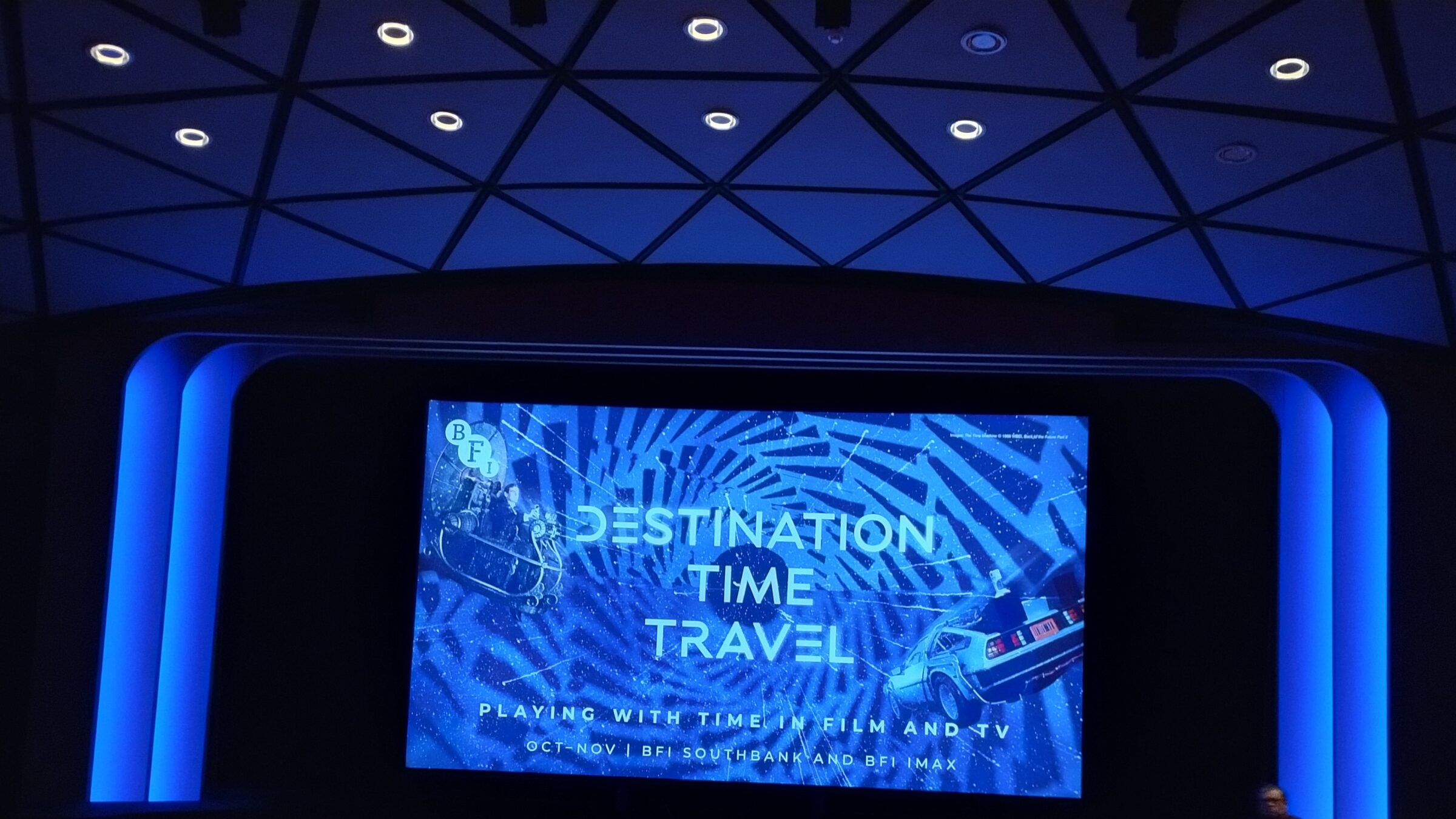
For any lovers of time travel the British Film Institute on the London Southbank is currently running a series of curated events encapsulating TV series and popular and arthouse films which have entered the common psyche called Destination Time Travel: Playing with Time in Film and TV | BFI Southbank Who doesn’t love Marty McFly or a squabbling Rimmer and Lister. An obvious choice was also to include an event about our favourite time machine the Tardis. Dick Fiddy, a regular host of the Doctor Who BFI events, is the programmer of the season and hosted the Tardis event on the 4th November.

Starting with the first of a series of short presentations interspersed with interviews there were stills of different aspects of the Tardis over the course of 60 years. These were supplied by Doctor Who Magazine and the presentation was overlayed with the 1st Doctor’ ‘s and 15th Doctor’s theme music.
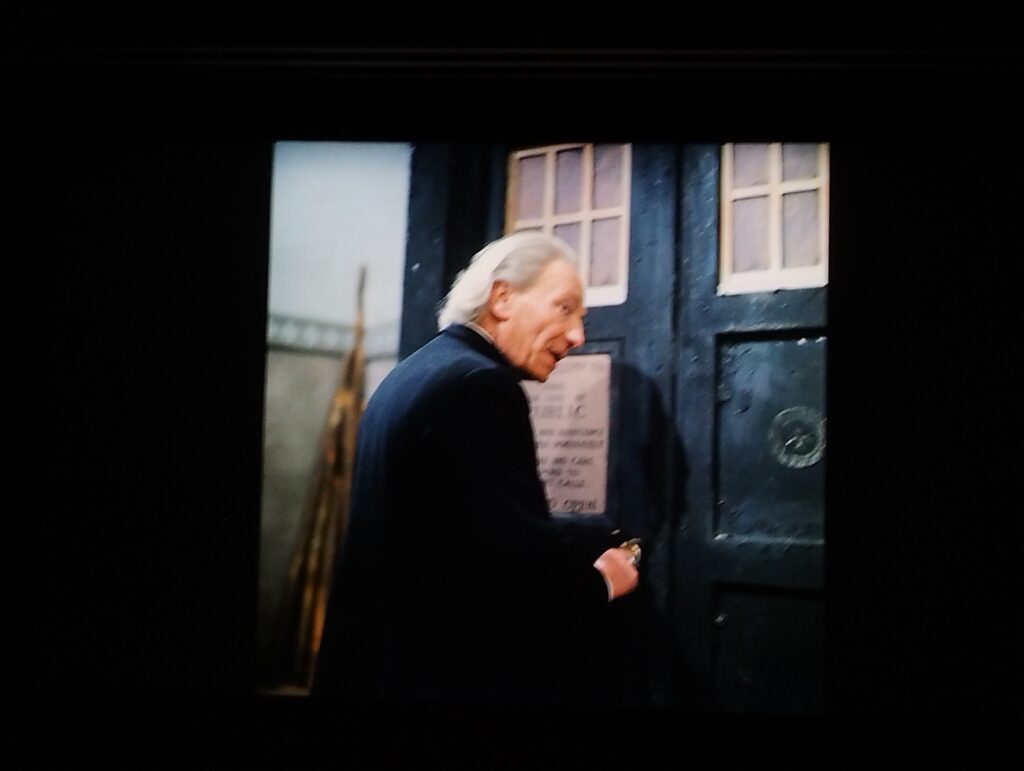


Interview with designer Malcolm Thornton
Malcolm Thornton was the designer for the stories Logopolis, Kinda, The Five Doctors and Planet of Fire. He studied interior and exhibition design and always wanted to work in television. After graduating he applied for an assistant designer role through the BBC training scheme. Describing the BBC as a “one-stop shop ” where everything was made in-house designers were tried out on different shows and could also request a show. He “waited for three years” before he was assigned to his first Doctor Who which was Logopolis. Being an area of interest he later requested Doctor Who to work on science fiction BBC drama Star Cops.
Malcolm also discussed the complicated process of getting a real police box and a Tardis side by side for Logopolis, on location at the Barnet Bypass. This was as the Master’s Tardis tried to materialise around the Doctor’s Tardis. He also then made updates to the Peter Davison Tardis later to tidy it up with the designer for Castrovalva inside with a “slim trim look ” in line with the look of the 5th Doctor’s costume. He described it as more decorative clean and simple than the Tom Baker era.


Clips within the Tardis
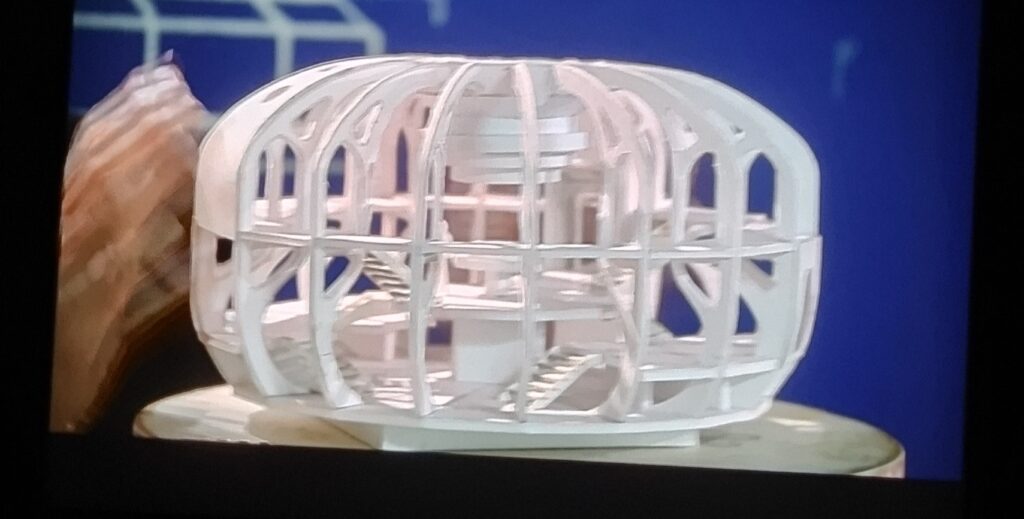
Continuing the theme of the design of the Tardis there was a screening of Doctor Who @ 50: Inside Tardis -which covered the design of the 11th Doctor’s Taris with then-designer Michael Pickford.


Interview with composer Mark Ayres
Mark Ayres, composer and sound restorer for the Blu-ray and DVDs and BFI regular, was also interviewed. Asked about remastering the soundtracks of old episodes such as for the Blu-rays Mark does mainly does a cleanup and some editing of the existing sounds rather than making any changes. However, when doing a 5.1.1 mix or special edition there is a little more leeway. He played landing sounds over the years including a clip from The Space Pirates.
Looking back at the history of sound effects Mark Ayres highlighted the film Forbidden Planet as an influence on what came later in sound for the 1960’s and discussed the creation of the original Doctor Who theme tune. Verity Lambert he explained had heard a group of Parisian avant-garde musicians, called Les Structures Sonores, who she originally wanted to create the theme tune for Doctor Who. But she later approached an Australian composer, Ron Grainer.
Ron Grainer agreed to do the Doctor Who score and submitted an initial original score. He had worked previously on a series called Giants of Steam with Brian Hodgson from the BBC Radiophonic Workshop where Brian created a rhythm track of white noise and clanking noises for the sound of a steam engine. Delia Derbyshire and Brian Hodgson then created the iconic “Who” theme from a single plucked string, white noise, and harmonic waveforms of test-tone oscillators overlaying the score.
Brian Hodgson also created the materialisation and dematerialisation sounds of the Tardis which Mark Ayres described as an organic sound of ” coming towards and going away”. Brian recorded his mother’s piano, scraping a door key against the strings, which he looped and reversed. It created the groaning sound TARDIS | 1963 | Full Take Off (An Unearthly Child). There is a timeless quality to the sound which may be due to the fact that Mark theorised is because it isn’t made on a synthesiser but from an oscillator designed to eject a very high-quality electrode signal into an amplifier. Then there would be a rendering device with a dial to distort the sound. Mark Ayres armed with his laptop was able to share with the audience different versions of the materialisation and dematerialisation sound which changed after the initial pilot episode.
The sounds of the Tardis have generally stayed the same over the years and Mark recalled with some amusement being invited to a meeting in Cardiff by Russell T Davies in 2005 without really understanding why he was there. Eventually, as the room filled in people, everyone looked to him with questions about obtaining the sounds of the Tardis. Luckily he was able to share the vast files which he had from his own time with the BBC Radiophonic Workshop.
The inside of the ship also has an audible hum noise which has varied over the years since 1963 and one of the issues that Mark highlighted is how the sounds are usually buried beneath the incidental music so go unnoticed. I thought initially my favourite “hum” was from the 1980’s but the 1960s version actually feels a bit warmer. The Tardis Cloister Bell was created by hitting an old immersion heater (an immersion heater has an electric heating element that is positioned in liquid to be heated, typically in a domestic hot-water tank) and the immersion heater is still available, Mark Ayres reliably advised for an update as required!
Interview with writer Steve Nallon
Dick Fiddy as part of the session has produced a book Destination Time Travel with Steve Nallon. As a conclusion to the event, Steve Nallon came to the stage for a short interview where he talked about the purpose of the time travel ship as a device in storytelling. He recalled meeting Steven Moffat who described the Tardis in a very practical way as “a bus” travelling to adventures. One of the golden rules of storytelling is the time machine should break down to stop the travellers from leaving or being uncontrollable. If the Tardis is always reliable, they can escape at any time to the day before. In the Back to the Future stories the DeLorean car gets hit or the Tardis is taken away, stolen or not working. In storytelling tradition, the hero has to solve the issue before they can leave.
One of the interesting concepts Steve Nallon highlighted to the audience is how the Tardis has developed a personality and the gradual updating that the Tardis took the Doctor where he needed to be. It has changed and made the Tardis more interesting as more than just a portal or a doorway to adventure which is a common theme in science fiction.
The event closed to the sounds of the Tardis dematerialising and we materialised over in the bar area. All in all, this was a fascinating afternoon exploring the best time machine on television in the universe and the BFI Time Travel Season of TV and Film continues at the Southbank until 30th November.


Comments
No one has left a comment yet.
Be the first and get the conversation going.