

Doctor Who: After The Daleks – Review

Thanks to Big Finish we know what happened to Susan later in life, following the Doctor leaving her behind at the end of The Dalek Invasion of Earth. We know that she had plenty of interactions and meetings with the Eighth Doctor later in her life, but what about straight after she left the TARDIS? We know little of what happened after that, and After the Daleks sheds some light on those events.
The world had effectively been destroyed at the end of The Dalek Invasion of Earth. Almost all technology had been destroyed and there were only frightened groups of people dotted around the globe thanks to a virus having been deployed by the Daleks to wipe out any human opposition. Author, Roland Moore explores this dark version of our world with obvious relish thanks to his look at the human aspect. This world feels a lot scarier without the Doctor and there are times here where Susan is clearly out of her depth. It all builds up to create a convincing dystopian future for Susan to find herself in.
But much like a lot of Moore’s stories, there is darkness and light. Amongst the violence and death, there is hope. Jenny, who was paired with Barbara for much of her television appearance, is working hard to bring the Robomen back and make them human again. She is having some degree of success but things are made worse when her brother is found. More glimmers of hope come in the form of alien goo, which when put in contact with humans, has the ability to bring back memories. While that might seem a little bit of a cop-out in terms of storytelling, Moore does the right thing and keep its abilities on the sidelines until it becomes a necessary part of the story.
Moore certainly has a lot of ideas, and his work on the Survivors series is clearly evident here. In the 1970s Dalek creator, Terry Nation created a television series called Survivors which saw a group of people have to survive in a scary new world after a devastating virus wipes out almost all of the human population. There are a number of similarities to that series and a number of other Nation related projects. Here, the world Susan and the listener find themselves in is as alien as it is familiar. And much like a lot of Nation’s projects, its humanity, which proves to be its own worse enemy.
For listeners and readers who are concerned that Daleks are being used too much by Big Finish of late, then they’ll be pleased that they don’t feature heavily here. The real villain is a man called Marcus Bray, a man who was in power when the Daleks were in control and who is determined to not lose the life he’s grown accustomed to. He concocts a plan to get elected into power by exterminating the sole surviving Dalek on Earth and Susan and her friends find themselves in his way.
Bray is as leery as he is charming, the perfect human cockroach who would instantly try to seize power and very often gets that power he seeks. Moore really explores the evil aspects of humanity through him, as well as the power of words and propaganda through his empty promises. To the listener, he is incredibly shallow, but to the characters, they see him as the sort of person they need to bring them out of the darkness.
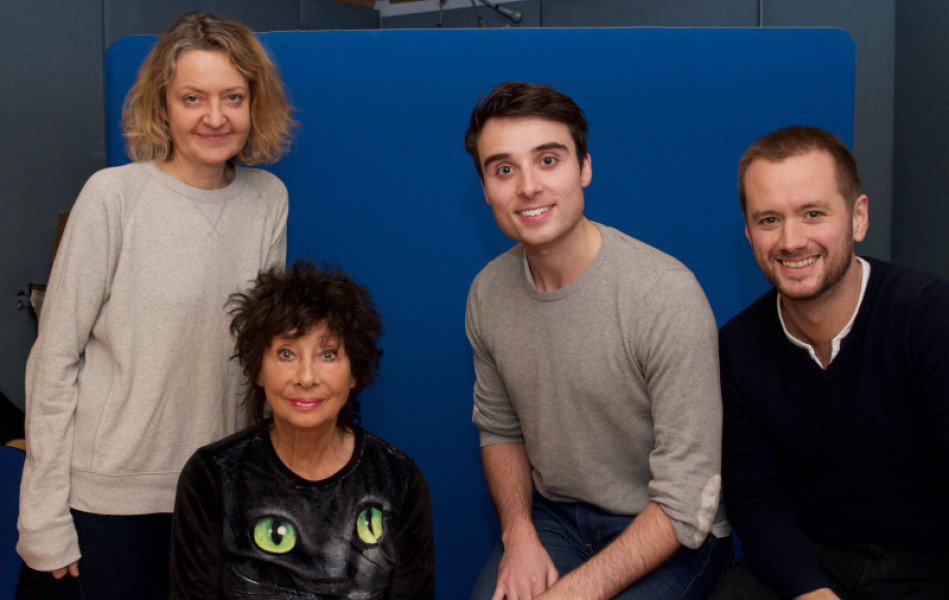
Carole Ann Ford more than proves she’s still got it as Susan in this story, stepping up to the plate when the Doctor isn’t there anymore. I said above she often finds herself out of her depth but that allows Susan to shine. Her scenes with David, this time played by Sean Biggerstaff are touching and feel natural, and despite having been introduced in 1964, feels very fresh. Moore makes sure we can see how much Susan and David care for one another. Carole Ann Ford will always be an excellent part of Doctor Who and that continues here.
If there was a part of this adventure that I didn’t like it’s that the narration is a little too talky for me. While that does strangely fit into the 60s vibe that the story has, I’d much rather have heard it through characters interactions and soundscapes rather than having it dictated to me. Much of my issues with the early Early Adventures was that the narration was too much and it’s a shame that it gets confusing here with the sound effects going off in the background. It doesn’t distract from the strong scripting but it does make it a little tiring for the listener.
I know it’s a silly thing to pick out and complain about but I really don’t like Audiobooks and I don’t like things to be dictated to me when I can imagine them on audio. But the script is strong enough to not get lost in some of the more, confusing, passages of this adventure.
As a result, After The Daleks is a strong entry into the Doctor Who mythos, which allows us a glimpse at how life continued for Susan after the Doctor. Unfortunately, it won’t be one I’m going to return to anytime soon, not because it wasn’t good, but because I found it heavy and a bit of a slog at times. But Roland Moore continues to impress with his scripts and Carole Ann Ford can do absolutely no wrong. I’ve no doubt that After the Daleks will be a story that will come to divide fans sometime soon, normally I’m happy to sit on the fence with stories like that.
Unfortunately this time, I know what side of the fence I’ll be on, it’s not a bad story by any means, it just didn’t make me care one way or another and that’s perhaps the worst thing for a Doctor Who story to do.


Comments
No one has left a comment yet.
Be the first and get the conversation going.