

Doctor Who: Legends of Camelot – Review
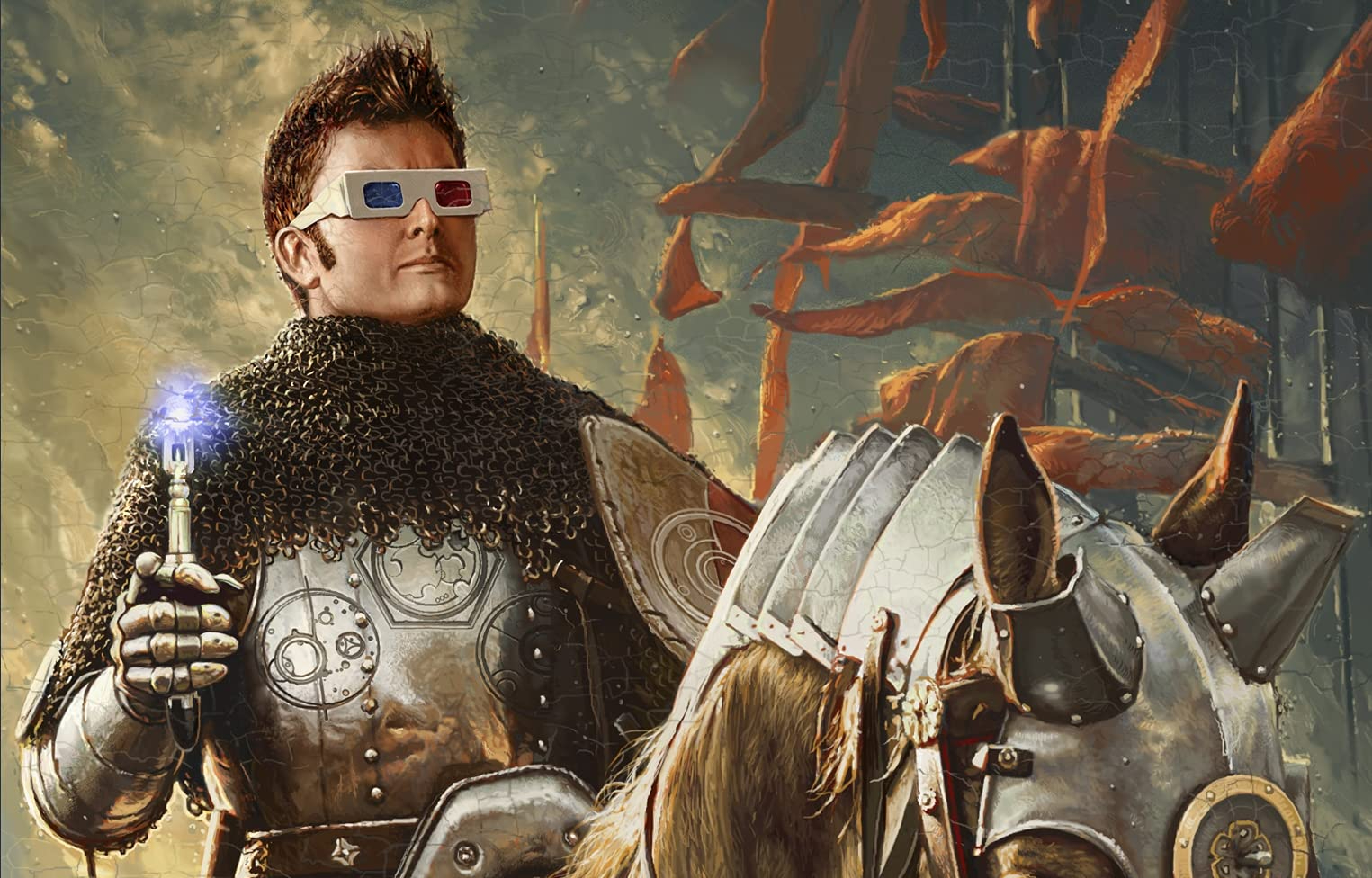
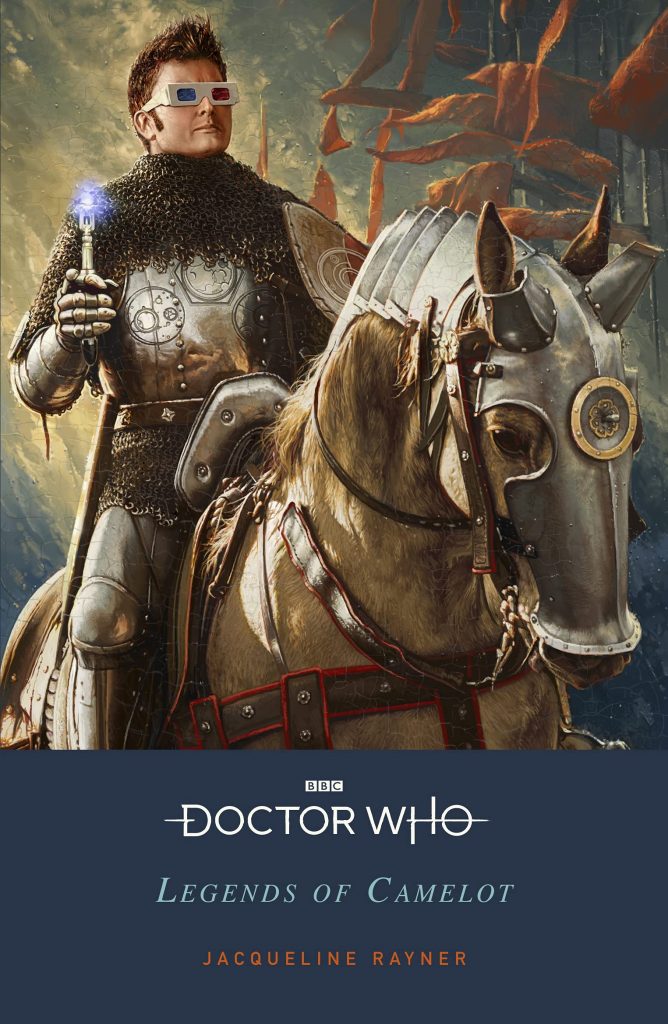
Following on from Jaqueline Rayner’s The Wonderful Doctor of Oz, the second novel of the literary crossovers, Legends of Camelot sees the Tenth Doctor and Donna find themselves in, you guessed it, Camelot. Surrounded by Arthurian legend, can the Doctor and Donna cope when plot threads from Battlefield come a-calling?
When the Doctor and Donna find themselves in Carbury, the Doctor quickly recounts the details of Battlefield and the adventure that took place for his Seventh incarnation and companion Ace. And when the TARDIS is quickly pulled through a breach and finds itself in the area around the mythological Camelot.
Much like the previous novel, Rayner quickly throws the reader into the action. Not a bad thing to do, though having been reading the Virgin New Adventures and being so used to the book taking forever before anything happens, I’ve found both books a little strange to jump right into the action. However, given the younger target audience, skipping a lot of unneeded bumph at the beginning will keep their interest.
I’ve always been interested in Arthurian legends. I remember loving Merlin way back in 2007/8 on the BBC and there are plenty of X-Men characters, especially in the team Excalibur that uses characters from the legends of Camelot. These are characters that I’m familiar with, and the many different versions of them are something that The Doctor quickly explains. Rayner rightly decides to keep the legendary characters in their most familiar form, Arthur the Once and Future King, Guinevere the loving Queen who had a thing for Lancelot and the rest of the Knights of the Round Table are featured enough to make readers want to find out more about them in history books.
Once the Doctor and Donna arrive in Camelot, strange wisps begin to crop up, giving Rayner an excuse to let the Doctor use his 3D glasses to see them properly and a quest to find a number of crystals that will seal the breach between this dream-like reality and the real world. The links with Battlefield are clear from the get-go and are an enjoyable addition to the continuing prose here, with little notes appearing in the Doctor’s pockets which Rayner teases might be from the Seventh Doctor, given their manipulative-ness. There is also mention of the Destroyer and the ongoing battle in the dream-scape, called the Druse, between Arthur and Morgaine.
Morgaine is another name for the main enemy of Arthur and Camelot, Morgana Le Fay, or Morgana, or Morguein, it all depends on how you want to pronounce it, and we get another version of her here, having hidden in Donna’s mind. This is a clever piece of writing from Rayner as we don’t really think twice about Donna’s questions until the Doctor brings it up towards the end. Rayner lays some clever deception down for the reader, making Donna question whether Rose or Martha would have as much trouble keeping up with the Doctor as she does, so she asks a number of complicated questions.
It’s a clever plotline that pays off brilliantly in the end, and you do feel some genuine worry for Donna towards the end of the book, especially as Arthur gets nastier as he gets older. the line, ‘Sometimes you have to sacrifice your Queen’, was a little haunting and has stuck in my mind since reading the book!
As usual, Rayner gets the characterisation right off the bat, The Tenth Doctor is his fun, bubbly self, running around the universe, his long coat flapping around behind him. And her take on Donna once again shows us what a brilliant companion she was. She isn’t afraid to call people, the Doctor or Arthur, out on their behaviour, while she does get a couple of nice moments with Guinevere, giving her some hints and tips on life and love. For me, Donna has been one of the more relatable companions of the modern era, and Rayner’s treatment of her character doesn’t do anything to change that relatability or likeability. I’d love to see if she’s going to write more for her character in the future!
Where Legends of Camelot ultimately let itself down for me, was with the slightly disjointed storytelling. Fans of Arthurian legend will no doubt have heard of the book, Le’ Morte d’Arthur, which is perhaps the most famous of all the stories compiling Arthur’s mythological life, and it’s known for its time-hopping. In Legends of Camelot, the time-hopping seems to happen every chapter, and while it does serve a purpose and is explained in the end, it does feel a little lazy sometimes, using it as a way of explaining how the Doctor and Donna got from A-to-B without any of the in-between. This is why here, everyone ages very quickly around the Doctor and Donna, it’s an element of the Druse. It’s complicated to even explain here, so it’s little wonder it makes the book feel a little odd.
I also wasn’t too sure of the ending, which felt very rushed. I couldn’t help but wonder if there wasn’t so much time-hopping that the ending would have had a little more time to play out, rather than the characters rushing off to battle a dragon in the last couple of chapters. However, a lot of the book is a lot of fun beforehand so it’s a little easier to forgive the rushed ending.
I really enjoyed The Wonderful Doctor of Oz and was eagerly anticipating reading this one. But from the opening chapters, I knew it just wasn’t going to live up to the previous novel. I wasn’t disappointed, but there were things that just didn’t gel as well here as they did in the previous book. And as a result, Legends of Camelot feels a little disjointed and flat.


Comments
No one has left a comment yet.
Be the first and get the conversation going.