

Report: BFI London Special Screening of Dragonfire
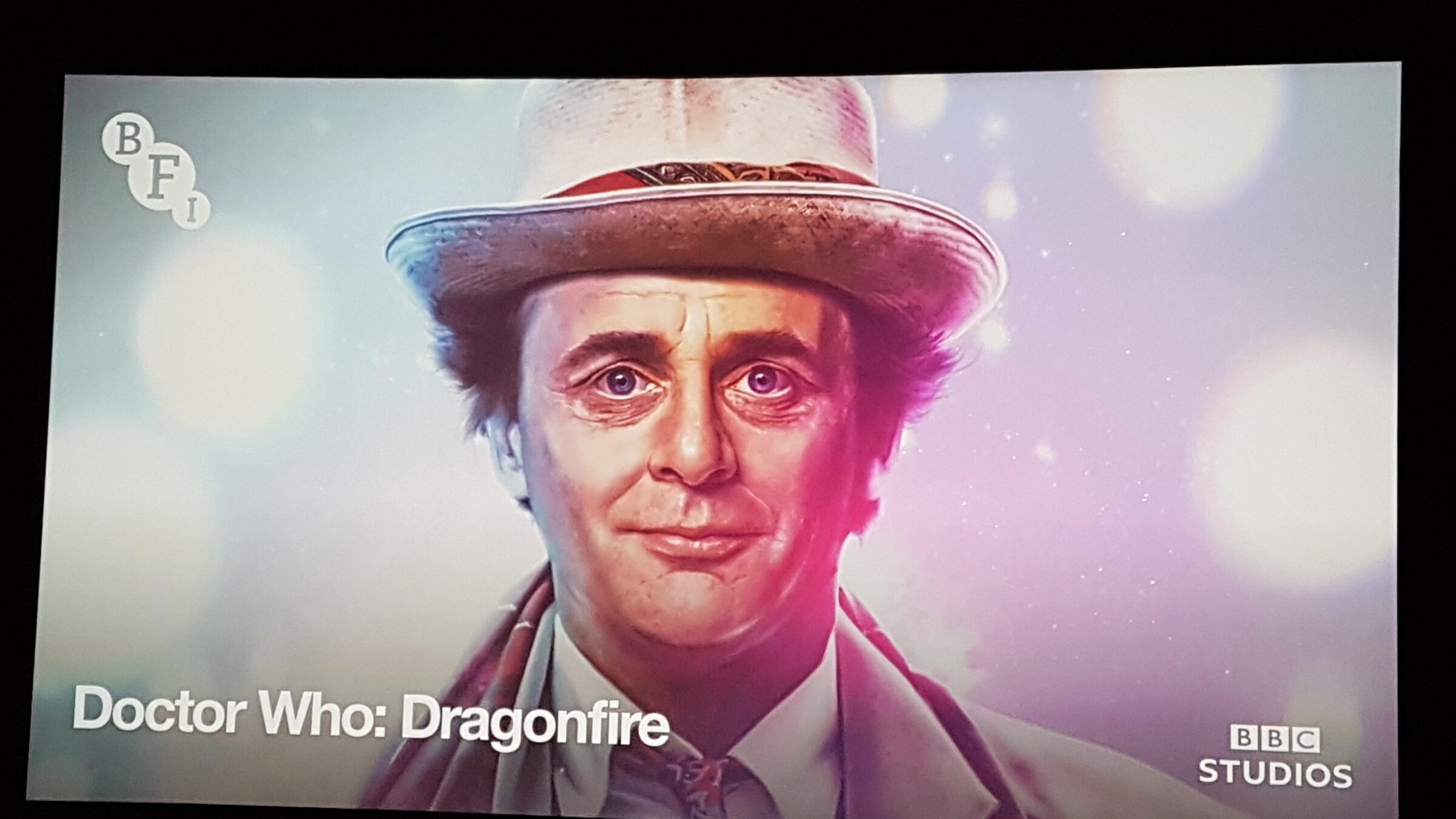
Doctor Who The Collection – Season 24 Limited Edition of classic Who is released on Blu-ray on Monday 28th June and to celebrate the BFI (British Film Institute) on the London Southbank ran a special event showing Dragonfire, the last serial of the season. I felt, alongside some slight trepidation being amongst the crowds, very lucky and happy to have picked up a returned ticket at the last minute to go to the BFI (thank you whoever you are). The really warm weather didn’t deter Londoners from coming out to the Southbank as the nation continues to moves towards some sense of normality.
As with other organisations due to the pandemic the BFI has followed government guidance and there were requirements to provide contact details for track and trace as you arrived, face coverings to be worn throughout the screening and due to social distancing, the auditorium was probably a third empty. Entry to the auditorium NFT1 was from a side entrance as was the exit. This meant my opportunity to wander to the foyer and visit the shop unfortunately ended up diverted once I ended up outside.
Back to the event itself and the fact wasn’t lost on the BFI hosts that it had been 15 months since the last Who screening when the Talons of Weng Chiang had been shown as part of the release of the Season 14 limited edition set. BFI host Justin Johnson (Lead Programmer for BFI) took the opportunity to publicly thank Louise Jameson who had taken the time to come to the BFI so close to the lockdown, at probable risk to her health, for the Talons of Weng Chiang screening to entertain the audience.
Justin Johnson also revealed it was unclear to them that, as the BFI plan so far ahead, this screening would have actually gone ahead and if it had the plan originally was to be just a screening of the episodes without any guests. Both he and Dick Fiddy (BFI Archive Television Programmer) also in attendance acknowledged new normality at BFI. Doing screenings with guests is more difficult they explained as there is a limit of three people being on the newly lowered stage including the host.
Justin was slightly apologetic as the audience would be unable to ask any questions to guests and the usual quiz icebreaker also wouldn’t be able to go ahead. Tantalisingly two actors who really wanted to be there but, due to other commitments or illness, were unable to be were Sophie Aldred, an ever-popular face at BFI, and Patricia Quinn, who played Belagz. The BFI however still managed to attract engaging guests to entertain the audience in between the screening of the three episodes.
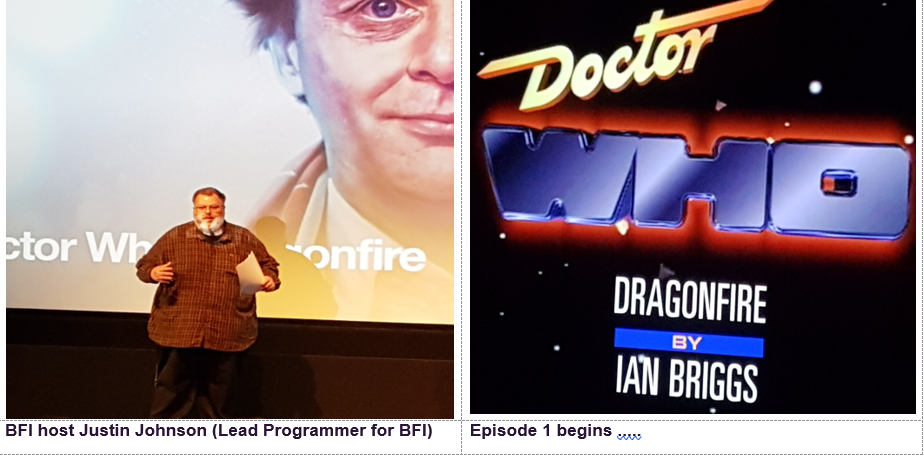
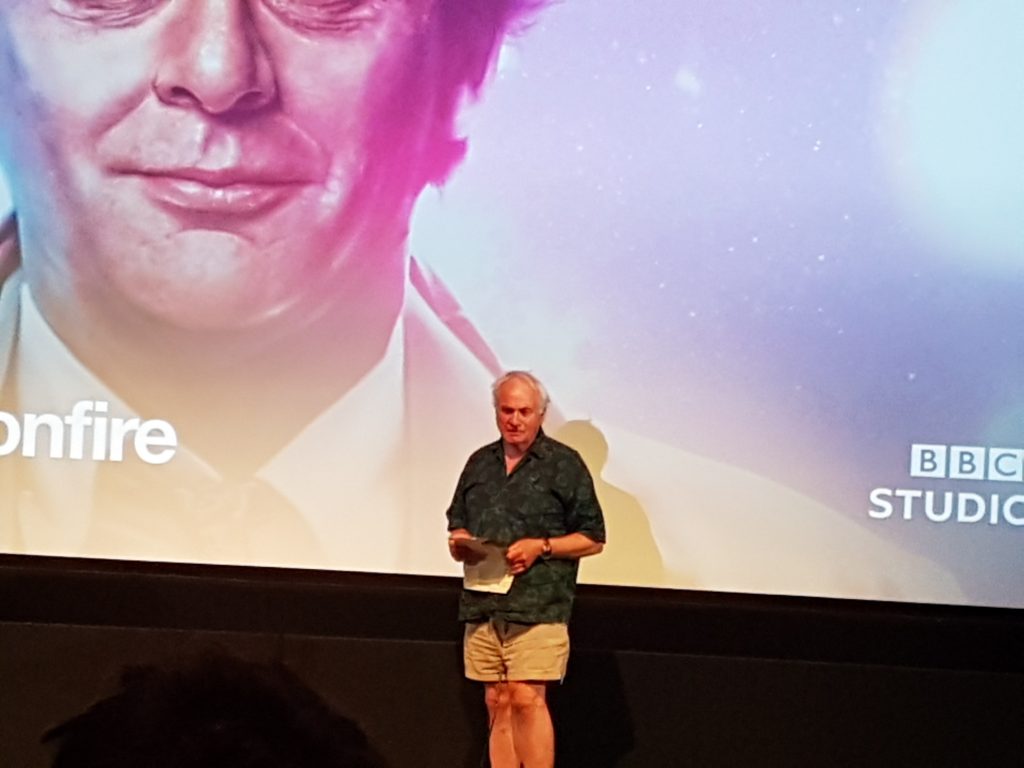
Bill Dudman – Cameraman
Bill Dudman worked as the film cameraman on Time and the Rani, Delta and the Bannermen, as well as Dragonfire Bringing a lot of experience from working on a 1980’s series called Star Cops Bill Dudman, was a chatty man who preceded to pull out a piece of paper from his pocket and refer to his notes as he spoke in some technical detail about the process of creating special effects using standard 35mm film.
Examples he gave were adding a painted effect through glass using an anti-flare solution to give the texture of atmosphere to the shots of the planet Svartos and Iceworld. An effect such as a spaceship taking off into space was done using a high-speed camera which filmed at 75 to 125 frames per second so in effect creating a slow-motion shot. Models were usually held against a background of black velvet as the camera moved past a stationary model.
Explosions, however, Bill explained, were different as they needed a fast film rate of approx. 500 frames per second to be filmed at in order to look realistic which could only be achieved using 16mm film. Filmed with the camera looking upwards vertically and the “explosion” on the side to show the effect of gravity the 16mm film of the explosion was overlaid as a composite over the 35mm film.
One of his earliest memories of Doctor Who was as an assistant cameraman working on Fury from the Deep and he remembered a funny incident of a shot of one of the effects staff dressed up as a sea monster bursting out of a pipe into the control room. The “monster” was meant to smash his way through a door but the hinges had been placed the wrong way. So, on the first recording, the monster stopped at the door and then pulled open the door in a very non-threatening way!
Russell Minton- Producer and Head of International Production Consultancy at BBC Worldwide
Justin Johnson joked that Russell Minton had never spoken about his work because he was scared of the fans at BFI. However, Russell offered some interesting insights into the creation of the special edition Blu-ray. He highlighted some of the challenges created by social distancing due to COVID19 and how Russell and his team have tried to create new and interesting strands of content by placing actors in unusual situations and by using Perspex screens. The Blu-ray has approx. 25 hours of additional content included although there was a lot cut out curiously.
Part of the success though of the Blu-rays, Russell explained, is there is a lot of goodwill from the original creators of Doctor Who and interest from fans internationally. There is a huge effort to make the release of the Blu-rays complementary to what is happening in the timetable of the current series.
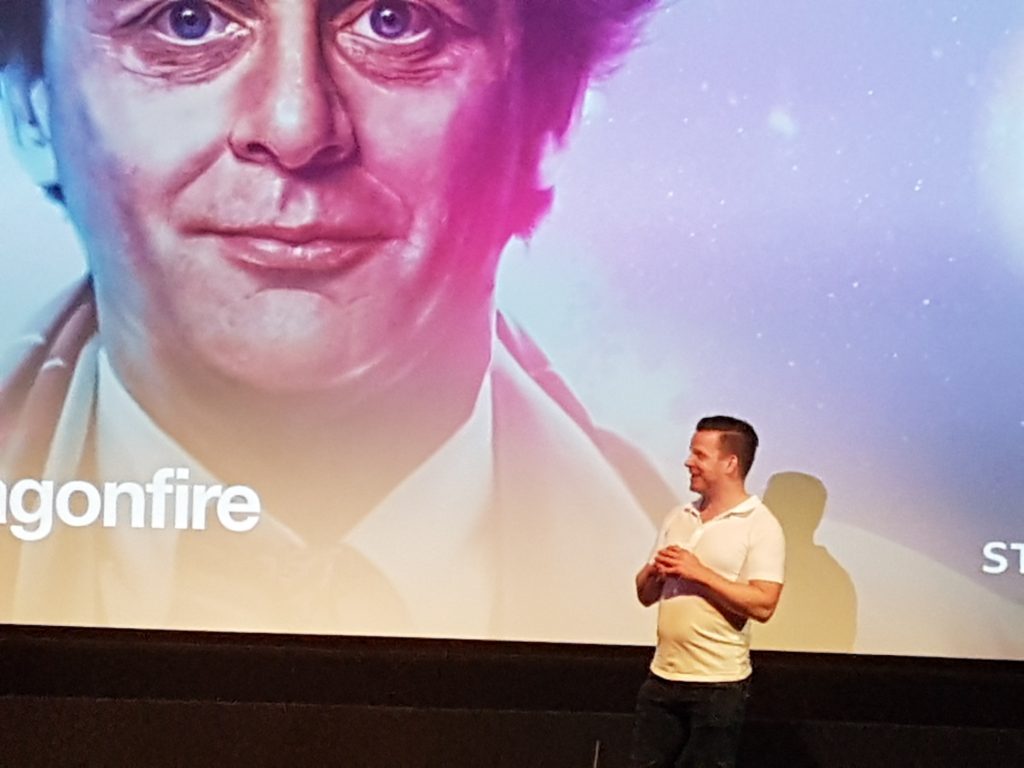
Later we watched some of the tantalising new content with extended highlights of behind the sofa with Bonnie Langford, Sylvester McCoy and Sophie Aldred reacting to Time and the Rani. Other actors also included Colin Baker with Michael Jayston and 5th Doctor era trio Sarah Sutton, Peter Davison and Janet Fielding. Other morsels shown to delight were A Doctor’s Table at the Ivy with Sylvester McCoy and guests where they played the mischievous game of if they could have another face who would it be ?… Extracts from the Making of Delta and the Bannermen, an interview with Lady Stevens (Patricia Quinn with a glint in her eye) where she seems delightfully droll and ahem “witty”…
The last highlight we saw was an extract from Sylvester McCoy In Conversation where he talked about how he said yes to the job of Doctor Who, the origins of his stage name from an old musical song “That’s my brother Sylvest” as part of the Ken Campbell Show. Now watching the clips of the younger Sylvester from the Ken Campbell Show plugging away in working men’s clubs and small theatres you get a sense Sylv is honing his craft which is a talent for comedy. There is something unnerving for me, or alternatively brave if you like, seeing a man willing to put ferrets down his trousers or setting off a firework from under his raincoat as entertainment. Please DO NOT try either of these at home. Sylvester is a professional! We also saw him giving his first impression of attending a fan convention during a heatwave in Atlanta with John Nathan Turner.
Ian Briggs – Writer
The final guest of the event was the writer Ian Briggs who wrote Dragonfire and the Curse of Fenric. As the creator of Ace, a fresh streetwise character a forerunner to the modern companions, and writing one of the more popular stories of the era in Curse of Fenric I found this softly spoken man really fascinating to listen to. Ian Briggs explained how he got into Doctor Who. He was a part of the BBC script unit reviewing scripts and received a good script from Andrew Cartmel. Andrew Cartmel later remembered him and asked him if he wanted to write for the programme.
I haven’t read a lot of love for Dragonfire (it came in at position 215 out of 241 stories in 2014 All stories Poll in Doctor Who Magazine) but I really enjoy the story itself because as a character piece it is pretty sound and there are some lovely moments of tension between characters. Ian Briggs explained some of his development of the script.
Kane was originally called Hess/ Haak named after the Nazi party politician convicted of crimes against peace but John Nathan Turner was worried the BBC would be sued for defamation so he became Kane. Glitz wasn’t there originally but Ian had created a similarly morally ambiguous character called Trader who he planned would die with the creature in space. There are always changes made to scripts and he revealed he didn’t have any involvement in the pre-production but was at the readthrough.
Ian Briggs has a great deal of admiration for John Nathan Turner. Although John could be difficult, Ian considers he was a good producer. Ian Briggs had been previously advised at the time not to make a fuss on Doctor Who as he would get a reputation for being difficult and John Nathan Turner wouldn’t hire him again. Ian recounted a story where he was asked to go to the control room as they wanted to cut a speech in Dragonfire due to an issue with the scenery. Ian Briggs had a gut instinct the speech should stay and wanted to say no and he was aware John Nathan Turner was looking at him intently. Ian asked for the speech to stay in and although it created an atmosphere in the control room, they let it stay. John Nathan Turner did hire him again for The Curse of Fenric.
When Ian Briggs reminded John Nathan Turner of the incident he acknowledged where Ian Briggs had been cooperative with the changes to the Dragonfire script such as losing his original character for Glitz, having to write two endings where either Ace left or Mel left (worked out at the last minute on the back of a serviette) that he, John, knew it had to be important to Ian.
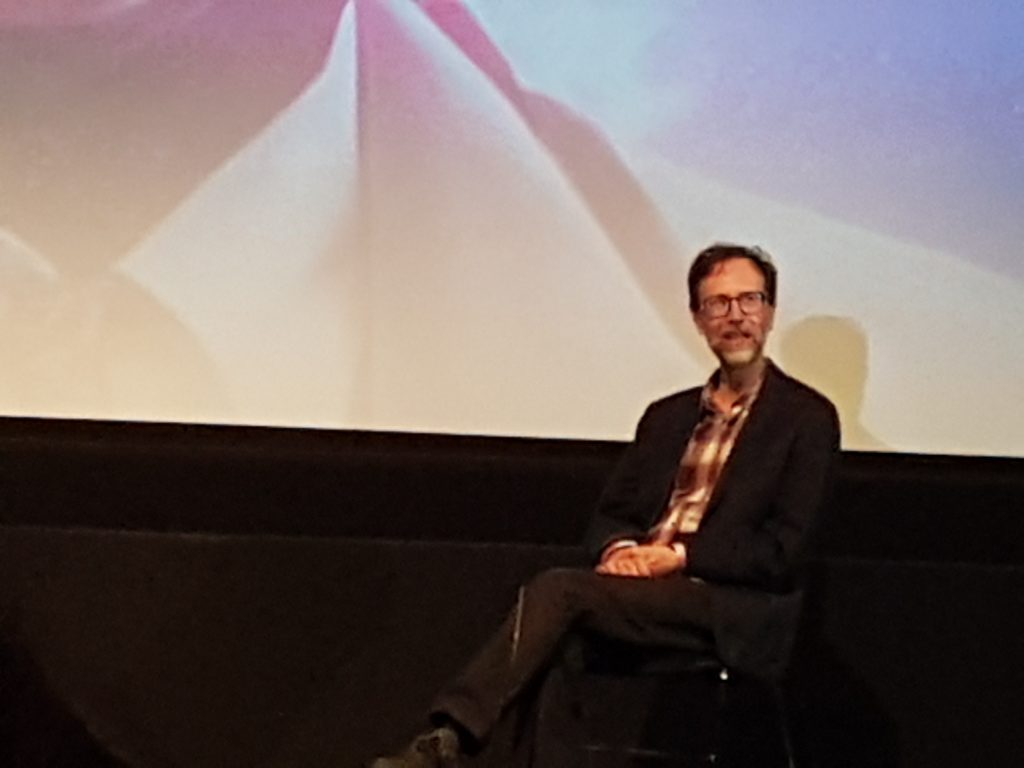
Creating an Iceworld in a totally studio-bound environment is obviously difficult on a small budget. One of the infamous moments highlighted by fans is the part one cliff-hanger wherein a seemingly inexplicable decision the Doctor decides to use his brolly to climb down a cliff face and it is a literal cliff-hanger. Ian Briggs is well aware of the discrepancy but was at pains to explain it was a lack of communication between the production team not reading his script.
Ian Briggs also wrote originally scenes in between where the Doctor saves Glitz’s life and they are separated and the Doctor comes to an ice face where the only choice is to go down. They were cut but the descriptions were in his script however the sets were built without looking at the fine details.
The ending of the event was a little subdued compared to previous events with guest signings not able to go ahead. There wasn’t a special postcard produced by the BFI for this event which would usually show the amazing cover for the Season 24 Blu-ray but with all the hours of special features, there is more than enough content to keep this fan happy. Welcome back BFI we so missed you!
Doctor Who The Collection – Limited Edition Season 24 is released on 28th June and available at your usual retailers.


Comments
No one has left a comment yet.
Be the first and get the conversation going.