

The Great Virgin New Adventures Review: Sanctuary and Human Nature
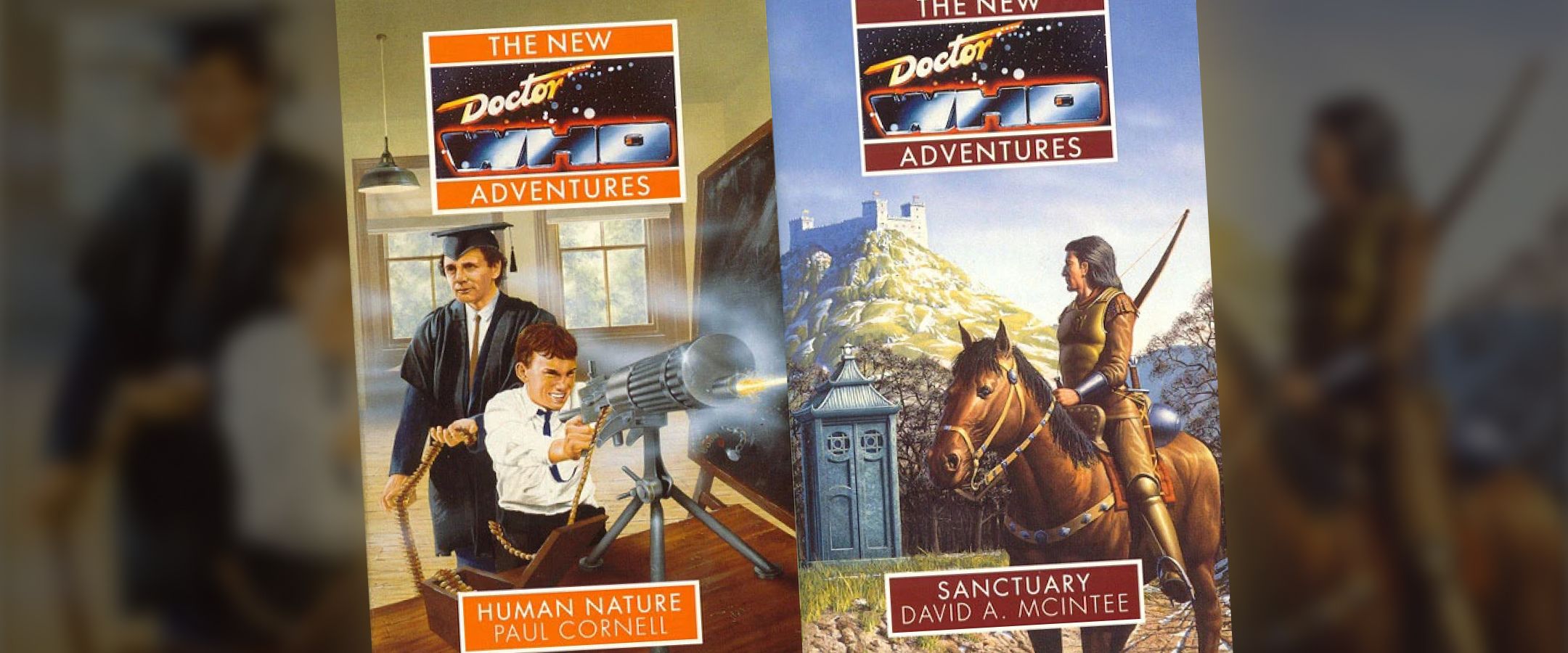
It’s felt like a while since we last took a trip back with the Virgin New Adventures the 1990s range of Doctor Who novels which told stories too deep and broad for television. But I haven’t been completely resting on my laurels I’ve been trying to get through a big bulk of them so that the reviews don’t feel so far apart, at least for a while, as well as trying to get my hands on the later ones now that I’m closer to the books which fetch crazy money online!
So what have we got this time? Well, Sanctuary sees the Seventh Doctor and Bernice sees them getting caught up in some religious crusades in France and Human Nature sees the Doctor becoming human and facing off against a family of alien mercenaries.
Sanctuary
Written By David A McIntee
McIntee is a bit of a divisive writer, I’ve enjoyed most of his historical adventures up until this point, though Sanctuary suffers from his need to do extensive research into the historical period and then show us how much work he has done. This isn’t a bad thing but it doesn’t look good or read well when the book really is a historical essay filled with almost nonsensical words that no one has ever heard of and there really isn’t any plot. McIntee’s other works have had some fictional science elements, but this time there’s no Master around, no zombies or aliens, so you’d think that this would be better suited for him. Unfortunately, though, it’s not really.
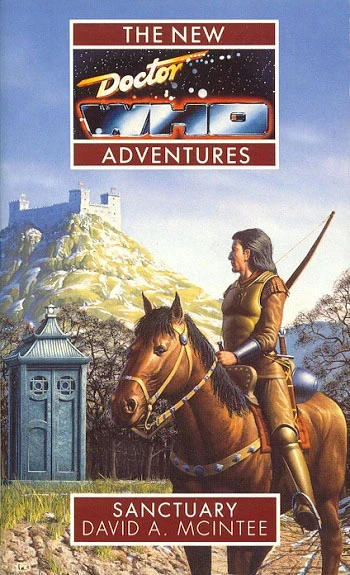
With the TARDIS getting itself stuck in a black hole in the beginning, the Doctor and Bernice evacuate using the Bodega TARDIS and the land in medieval France at the beginning of the Inquisitions. This is where the problem with historical adventures can come into play, if you have no idea what the subject is about, then it can just confuse the reader. I know about the Spanish Inquisition but had no idea that it began in France. And this book is set fifty or so years after the First Doctor adventure, The Crusade so there is the occasional reference to those events. I think this book could possibly though alienate some of its audience even today twenty-seven years after it was written because it feels like everyone should know what is going on and if you don’t then you’re daft. I had no idea what the Roc was, no idea that the Inquisition began in France and not a lot of knowledge of Medieval France.
It wasn’t all bad though, there was a moral grey area with some of the antagonists who only seem to be religious when it suits them so that they can get away with some of their extreme actions. The worst and most sadist in this book is Guzman, who leads the inquisition and murders and tortures his way through most of the supporting characters. He is a power-hungry madman desperate to off his competition and the power struggle comes ahead early in the book with a load of soldiers being murdered and making it look like the other side has done it. There is a number of moments like this throughout the novel, where characters pit their wits against one another but it works against the story as there are a number of moments where it felt like the book could have actually ended instead of carrying on.
And in typical New Adventures tradition, the violence is pretty explicit too. There’s torture, deceptions, poisoning, stabbings, limbs going missing, bowels spilling, crunchy splats and blood gushing. I know the time period was incredibly violent but every page didn’t need to have some grotesque way of dying explicitly described to me.
Another problem is that given how this was presumably a real event, McIntee can’t stray too far from the original events. That’s a shame because had he had someone like the Meddling Monk or an extra-terrestrial threat, then it might have given the book the shake-up it needed. Instead, we just get the details of the original event in all its detail with Guzman trying to invade the Roc, a sanctuary for those deemed heretics, but the only entrance is through a secret entrance.
Guzman has a spy on the inside but they are getting hampered by the Doctor, Bernice and their new friend Guy De Carnac. And there isn’t a lot of time spent looking at whether they can change the outcome of the coming fight. The Doctor and Bernice seem resigned to the fact that Roc will fall but if you aren’t familiar with this period of history then maybe a time traveller and an archaeologist aren’t the best characters to have to tell this story, especially as they already know how things turn out.
I think the only reason I continued to read this book was that I found the love story between De Carnac and Bernice to be hugely enjoyable. There isn’t any of the heavy-handedness of previous novels with love stories, no quick kisses or graphic descriptions of two people getting along like a house on fire. This is a slow burn but we know that they can’t be together and in some way, so do they. In the end, it all comes down to Carnac giving Bernice and the Doctor time to escape to the TARDIS while he chops away at the bad guys trying to kill them. We never learn of his fate, and Bernice decides to try and live in hope that he survived even though it, from the prose, seems incredibly unlikely.
Fans of these novels often describe Sanctuary as Bernice’s story. And in part, I would agree, much of the story is told from her perspective but there is little character development for her, beyond things we already knew. Her love story is told a lot better than Ace’s doomed relationships in Nightshade and Love & War, perhaps because we knew it was doomed from the beginning but both characters are written so affectingly we can’t help but fall in love along the way. However, it is clear how much McIntee seems to be missing Ace, even going so far as to have the Doctor comment on how empty the TARDIS feels right in front of Bernice. The only Ace mentions I enjoyed here were when Bernice wonders what she would have done in these situations.
The result though is pretty basic. There doesn’t seem to be as much love poured into this one as there does in many of McIntee’s other works. And I think there have been other history lessons in Doctor Who told much better, but it is plenty evocative and McIntee does a great job of making the reader feel like they are there with the two regulars. Unfortunately, though there wasn’t enough here to keep my interest for more than a little while so the book took me weeks to finish as opposed to days like other books. I know across all the other Doctor Who novels there are other historical adventures, I just hope that some of them have a bit more flair to them and take place in eras that I actually know!
Human Nature
Written by Paul Cornell
It’s a well-known fact that Human Nature/The Family of Blood is based on this popular novel by the same author. But now having read the book, I have to admit to thinking that the novel is a lot better than the television story, which is still great, but some of the changes needed don’t work as well as they do reading the novel.
Following on from Sanctuary, the Doctor decides to try and discover what it means to be human, maybe then he can finally truly understand what makes his companions tick and why Bernice seems to be so upset about the death of her flame Guy De Carnac in that previous book. This is the first of the better deviations from the television episodes. Once again the Doctor’s actions here are premeditated and planned, it’s still as manipulative as ever, once again showing the Seventh Doctor’s darker streak. Surely there was a better way of helping Bernice to mourn than just ignoring her completely and becoming human and only thinking of her as his niece?
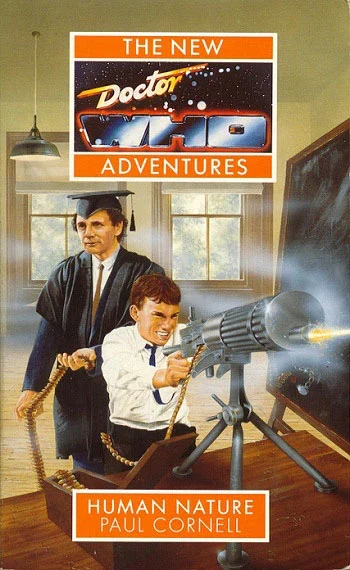
The Family are here too and like the television version, they want the energy of a Time Lord to expand their life spans, but the television version doesn’t really give much explanation as to why the Doctor seems to be petrified of them. Here they work better as an invading force, and the idea of them being a family of misfits works better than Father of Mine and Son of Mine etc. Some things are the same, with the little girl having a red balloon, though the balloon is a killer weapon here instead of surveillance equipment. They also work better because its Bernice who has to deal with them for much of the book and as a result, this works as a much better look at her character than Sanctuary did, showing how much she has learnt from the Doctor and Ace, using the weaknesses of the villains against them.
Unlike the television version, I was pleased to find that the Doctor felt like less of a villain. I really don’t like the John Smith of the televised version. Here he still feels enough like the Doctor to not feel completely horrible. Here he finds different ways of getting the young boys to use the guns against the baddies and when it comes to punishment, he avoids it completely. He critiques other teachers’ techniques, actively creates an intelligent conversation between his students and speaks in his Scottish accent. And the biggest difference is that he isn’t vile to Bernice like he is to Martha in the TV story. He still treats Bernice with enough respect for her to still think of him as the Doctor and doesn’t completely dismiss her when she warns him of the oncoming alien threat, though he does take some convincing.
He does have to eventually choose whether to live as John Smith or the Doctor and while it remains unclear if there was still enough of the Doctor to influence his decision, John Smith eventually decides to save the world because that will save the life of his love, Joan Redfern. Joan on the page comes across as a much better version too and while some of the more prickly aspects of her character like her 1900s outlook on people from other places in the world still come into play, Bernice has to admit that John Smith has done her some good, smoothing some of her sharper edges and gradually making her a much more likeable character throughout the page count. In the television series, there isn’t a lot to really make her nice and while Bernice doesn’t much like the thought of her driver stranding them at the beginning of 1914, she manages to make the reader take another long look at this Doctor.
Unlike the Tenth Doctor, there isn’t much doubt that without Bernice the Seventh Doctor would have become the Doctor again and then just swanned off to the TARDIS without telling Joan the truth. Bernice forces the Doctor too, telling him that Joan isn’t stupid and deserves to know who the Doctor is. Of course, she knows that Joan won’t love the Doctor and she certainly isn’t suited to the sort of lifestyle they lead, but she deserves the choice, something the Seventh Doctor would have probably taken away from her.
Like many of the best Paul Cornell books, this one handles emotion fantastically well. Not only do you have the horrors being committed by the invading aliens but there is the shadow of the oncoming first world war on the horizon. Some characters, thanks to the Doctor hiding his alien consciousness find out what fate might be awaiting them but there is some for and against joining a fight, there is just as much honour in objecting as there is in doing what you think is right. And it was nice to see this version of the Doctor not using the children as weapons before they are old enough. But despite this, it was a surprisingly light and refreshing read, in which Cornell manages to walk the tightrope of the horror and comedy mix that the best stories have. While his previous book, No Future felt like a bit of a mess, this is a much more concentrated affair with a lot more focus put into it.
The Virgin books haven’t done anything new for a little while now and we’re growing bleaker and bleaker so it was nice to find that despite its setting Human Nature felt like a completely accessible and refreshing read. Certainly, it is one of the best books from the range I’ve read, if not one of the best so far, you just need to stop thinking of the television version as you’re reading it. Or you can have fun comparing the two. Something I really like about Cornell’s books which some other writers don’t seem to understand here is that you can have misery and despair as part of the stories, but you shouldn’t completely wallow in it. There should be hope and happiness too, never just settle for pain and misery. Like Bernice, you should always be moving forward.


Comments
No one has left a comment yet.
Be the first and get the conversation going.