

Ian Chesterton: The Original Leading Man

Since the birth of Doctor Who on 23rd November 1963, the show has seen many great leading men and leading ladies, and every one of them has brought unique humour, charm and gravitas to their station as the face of the show. Not to mention the range of styles too: dashing suits, big long scarves and… urm, celery?
But none of them had the weight on their shoulders that the show’s original leading man had. No, I am not talking about our beloved William Hartnell who had to begin the show for its first few years in the title role. I am talking about the show’s unequivocal first lead character: an ordinary science teacher who became a hero across all of space and time…
Ian Chesterton, one of the Doctor’s original companions, along with Barbara Wright, a fellow teacher, stumbled upon the TARDIS when he and his colleague’s (or should we say… love interest?) curiosity got the better of them. Finding their student Susan Foreman to be out of the ordinary, they decide the most responsible course of action is to follow her home and see what she’s all about (goodness, the 1960s were a different time).
Long story short, her grandad is an alien with a police box that is bigger on the inside and frightened out of his wits that they will snitch on his dimensionally transcendental machine, he kidnaps them. Quite rightly they are furious with him, but eventually, they all settle down and enjoy going on adventures together.

It’s not a typical way for you to begin a story, but hey, that pretty much sets the tone for the rest of Doctor Who‘s ongoing history.
Now of course, Barbara was a resourceful, clever, and confident addition to this time-travelling team of four, but this was the 1960s and there was certainly a favour towards grandiose male heroes. Thankfully times have changed and things are a little more balanced now. But Doctor Who‘s undeniable first main character, though he was yet another dashing young male, strikes such a chord that the character – and indeed, the legendary actor who portrays him – must be celebrated.
Join me in celebrating the recently passed William Russell, and the first hero of Doctor Who, Mr Ian Chesterton.

Chetterton, my boy!
I think what’s obvious to absolutely everyone who dives into these formative years of Doctor Who is that while the show is named after the Doctor, it feels more like Ian’s show. It rarely feels framed as ‘the time travelling alien and his team of unwitting companions go on adventures’, but more ‘an ordinary science teacher and his colleague are dragged around time and space on a crazy escapade’. And honestly, I find the latter much more compelling!
Why does it feel this way? Well, right from the off, Ian shows how much of a badass he is. He accepts very quickly the terrible ordeal of being stuck in 100,000 BC, is an active team player who attempts to make fire for the disgruntled cave dwellers, praises Susan for her funny idea with the fire skulls, and even helps an injured cave dweller who five minutes ago, was holding him hostage!
Then in The Daleks, he boldly illustrates to the Thals their unrecognised capability to care about something beyond themselves by pretending to take away one member of their tribe – a mix of spiritual guru and Seventh Doctor manipulation ala Curse of Fenric going on here. And like Indiana Jones, he practically leads the expedition into the Dalek city to retrieve the fluid link. And this is only the second serial of the series!
The virtues of this character just keep on coming. He is skilled at Chess, playing it with Marco Polo while at the same time rocking a brilliant period costume. He happens to know a bit of martial arts, which serves him well in the Aztec times. He survives the perils of the French Revolution and is miniaturised. He faces the Daleks again and survives being inserted into the Earth’s core!
He then has to contend with making friends with Delos, a guy he met in Roman times, and then being forced to fight him to the death. And he gets embroiled in some boring political drama between the Menoptra and the Zarbi (I honestly wouldn’t wish this on anyone). Perhaps most epic of all, he gets knighted by Richard the Lionheart. So really, we should be referring to him as Sir Ian of Jaffa!
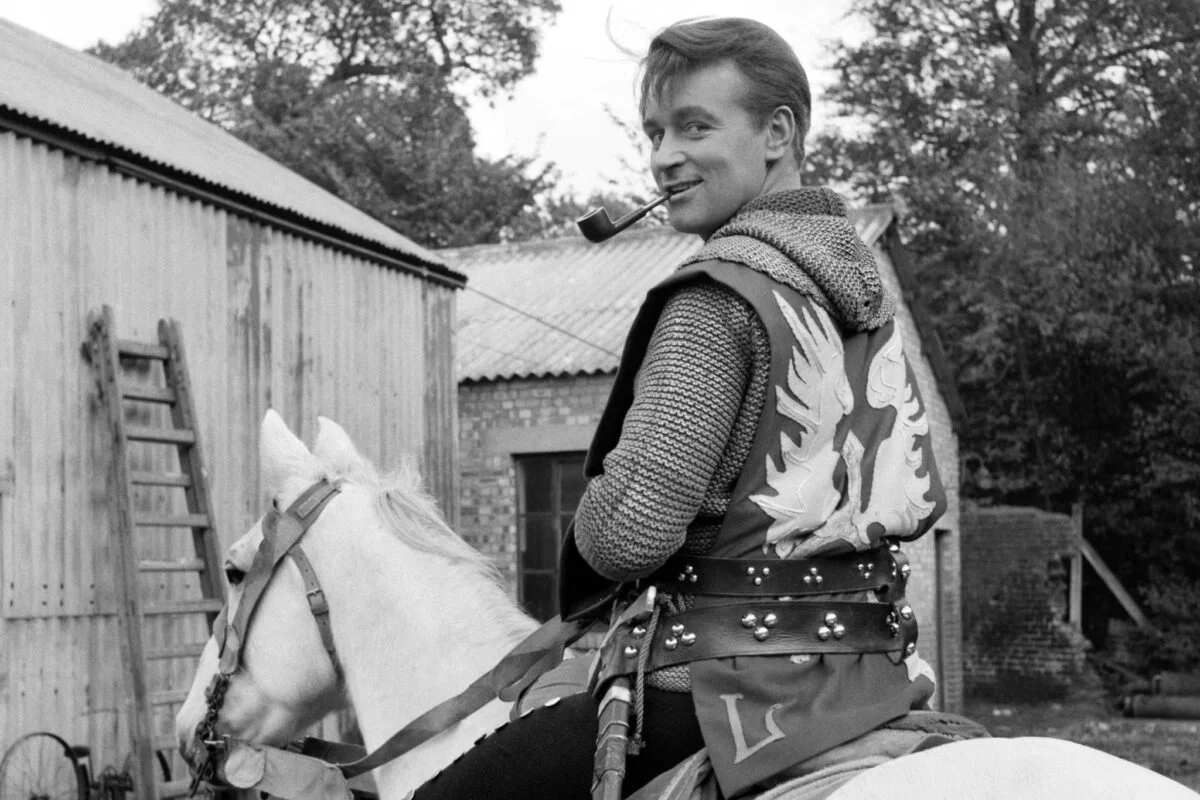
Quite the resume! By the time he returns to Earth with Barbara to their own time, he has had quite a string of adventures. By this time it felt like ‘Ian Who’ had ended and ‘Doctor Who’ had properly begun. During the show’s brilliant first two seasons (which I write about here and here), the Doctor establishes himself as a wonderful character. But there is no mistaking that the most memorable and important character of this era was Sir Ian, who was expertly written by a group of talented writers and expertly performed by William Russell.
Even down to the cast holidays, Ian had more presence. The Doctor wasn’t even in some episodes when William Hartnell took his well-earned breaks. William Russell, who only took his holiday at the tail end of Season One and his time in Season Two, was a significant presence each week. When he did take time off, he was always featured in pre-recorded footage (in both The Reign of Terror and The Crusade).
Until Ian and Barbara eventually left the show, it certainly felt like Ian was particularly integral among the main cast of characters. I can only imagine how thrilling it must have been, week on week in the mid-1960s, to tune into BBC 1 on Saturday evenings to find out what scrapes Ian Chesterton would get into next and how he would navigate them.
Oh, by the way, Doctor… congratulations!
One of my favourite things about Ian is that he is just really funny. This is helped by the context around the character: the standard of acting in the 1960s was a bit more… shall we say, stringent. If you were a character of virtue or intelligence, you were a very posh British stiff-upper-lip person on BBC television. In contrast, accents would become more regional for the opposite kinds of characters. Much like the show, the acting was rather black and white.
The vibe was often reserved, controlled and fixed. But William Russell’s performance feels, more often than not, like it is trying to break free from that stringency.
One moment that stands out for me is during The Aztecs when Ian finds out that the Doctor is engaged. Take a look for yourself…
I adore this clip so much. It is a tiny moment amongst the shenanigans of The Aztecs, but it pops because it encapsulates what I love about Ian. He’s focused on the problem at hand to find a way to the Tomb, but he will be overzealous in showing incredulity at the news of the Doctor’s engagement. The line delivery of ‘Your what?!’ has me in stitches every time. The Doctor is trying to crack on with solving the problem, but Ian is still smiling his head off. And then Ian makes sure to tease the Doctor before he goes away, before continuing with laughing his head off.
It’s in moments like these where Ian finds the humour and positivity, or even when William Russell just portrays so much joy with the character, that make him infectious and fun. It feels distinct among a sea of posh British actors behaving in posh British ways in 1960s Doctor Who. Ian is just a lad who wants a laugh, which feels refreshing and lighthearted to watch.
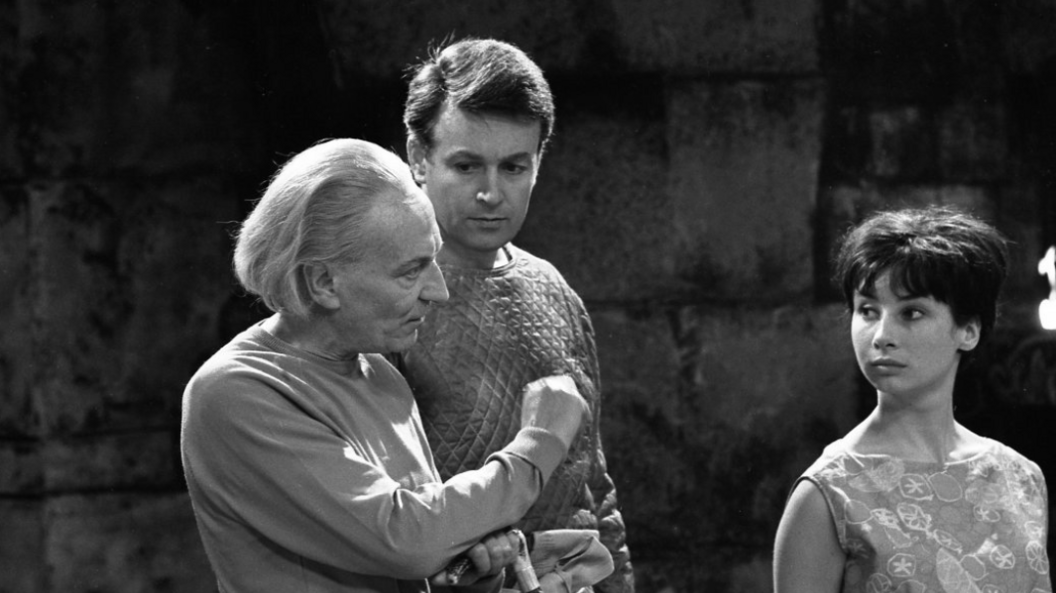
Over time, this performance of Russell’s has endured and with that, its humour. Who can forget the LONDON 1965?! meme popularised during the Doctor Who Twitch streams a few years ago. What can I say? Ian is just naturally funny, which makes sense for a character who is so good-natured.
I take things as they come. Come on!
The thing I love most about Ian is that he just makes me feel better about life.
Let me take you guys back. Around the time of December 2022/January 2023, I was facing some mental health issues. I don’t need to get into why, but what is interesting is that I was helped through this time by watching all of William Hartnell’s era of Doctor Who. Namely, I was inspired to push through and overcome my personal challenges because of a certain poster boy for positivity. No, it wasn’t the grumpy old Doctor… it was Ian!
From the very first episode, Ian sums up his approach to life in two sentences:
I take things as they come. Come on!
That’s Ian, right there. A guy unwillingly whisked away from his ordinary life as a science teacher to all sorts of places getting into all sorts of trouble. He nearly drowns, nearly dies from illness, gets locked up, is forced to work as a slave, gets shot at by Daleks and perhaps worst of all has to make friends with an annoying Menoptera. But he just takes it all as it comes! Like a boss.
I genuinely sometimes ask myself, what would Ian do? Because it doesn’t matter what hideous, awful scrape he happens to be in. He jumps on that metaphorical surfboard and rides whatever wave is thrown at him. And he does it with a smile on his face.
I know the show is called Doctor Who, and the Doctor as portrayed by Hartnell in these early years is a wonderful character in his own way. But it is Ian Chesterton and his unwavering positivity that keeps me coming back to those episodes. When I want to cheer up, he’s the character I want to spend time with. And I feel like we can all learn something from Ian Chesterton’s positivity. I believe that if we can be a bit more like Ian, we can take on pretty much anything.
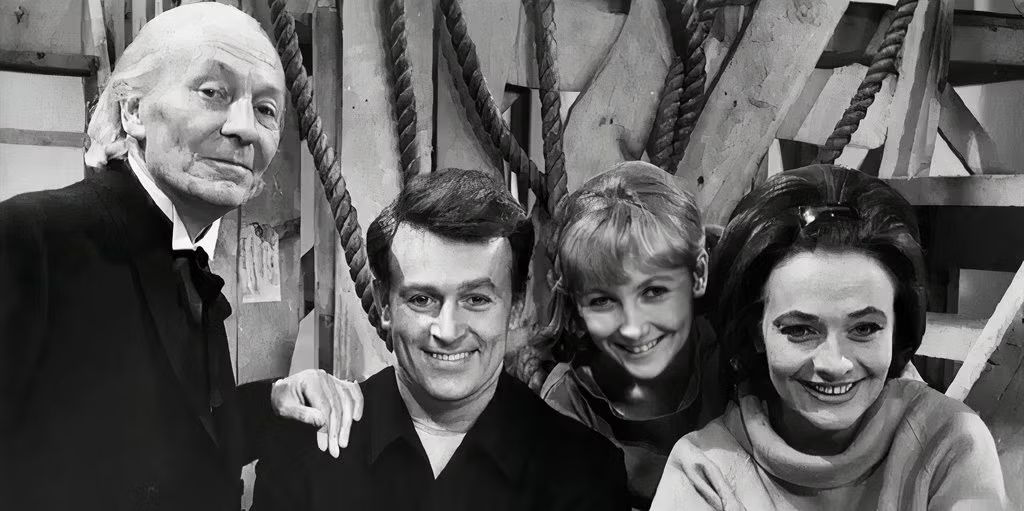
Sorry. Did you say… her? (Conclusion)
Not only does Ian Chesterton and William Russell’s legacy prevail from his enduring performance in the 1960s, but he made a wonderful return to Doctor Who this very decade!

The Power of the Doctor was a treat of an episode for its many cameos and easter eggs. But best of all was Ian Chesterton, an original Doctor Who companion, turning up at the companion support group and bewildered that the Doctor he knew as a crotchety old man is now a woman! This still feels in character for Ian; of course, he’d be incredulous at the concept of regeneration and the Doctor becoming someone entirely new.
I’d like to think he would still love spending time with Jodie’s Doctor – yeah, their friendship is based on him initially being kidnapped and it feels somewhat of an example of Stockholm syndrome if you think about it too much, but it’s a sweet friendship nonetheless. Thinking about it… Ian Chesterton and the Thirteenth Doctor would be a laugh. Would someone be able to write this as a book or a comic? Just give me some of the royalties…
Jokes aside – William Russell, bless his heart, was facing dementia at the time of filming this cameo. I would like to think his personality was very similar to Ian’s – in the face of wretched adversity, he still showed up and still had a smile. He still reprised a role he was known and loved for, and he earned a Guinness World Record for the longest gap between TV appearances – 57 years, 120 days between the final episode of The Chase in 1965 and The Power of the Doctor in 2022. How amazing!
William Russell had a long and varied career in TV, film and radio drama, but I will always adore his work as Ian Chesterton. He is not just the Doctor’s greatest companion; he’s one of the show’s best characters full stop.
Seriously, next time you are in any sort of trouble dear reader, just ask yourself… what would Ian do?
May William Russell Enoch rest in peace. He leaves a light in the universe that shall last forever.


Comments
No one has left a comment yet.
Be the first and get the conversation going.