

The Problem with the Fifteenth Doctor Always Crying

One of the most consistent critiques made about the characterisation of the Fifteenth Doctor played by Ncuti Gatwa is that he is always crying. Gatwa is easily one of the most talented, charismatic actors to take on the role, but we are all hung up about this Doctor’s consistently vulnerable display of emotion.
Is he too sensitive? Right out of the gate, I would say he isn’t. But is he crying too much? Yeah, I think so. And I will explain why. Just what is the problem with the Doctor shedding so many tears as of late?
A Traumatic and Compelling Hero…

Let’s rewind. The Doctor bigenerates. The 15th Doctor springs onto the screen wearing a shirt and underpants. He’s flamboyant, smiley, confident. And he’s written as a free spirit, literally torn from the pain and anguish of the 14th Doctor. ‘Rehab out of order’ they called it – Fourteen stays on Earth with Donna and her family to heal so Fifteen, who has been liberated from this process, can fly off free as a bird to have adventures.
Unburdened by all the baggage the Doctor has accumulated over the last several years. What an exciting new direction for the show, I thought, a Doctor healed from his trauma?
Let’s rewind even further! A primary focus of the Doctor’s character in the revived series was the trauma, and this made for captivating viewing and justification for the show being brought back…

Just think about that for a second… the Doctor in the first 26 classic seasons was superbly played by all actors who took on the role, but there wasn’t a huge amount of emotional depth, was there? Yes, he was a confident main character with a lot of intrigue – I think mainly of the Seventh Doctor’s hidden darkness and the Fourth’s ancient alien whimsy – there was perhaps depth in a character background sense. But from what I have seen of most of the Classic series, the Doctor doesn’t have any weaknesses. He isn’t heavily flawed or even very vulnerable. I love the Doctor in these older episodes, but I don’t feel any empathy for him.
But with the modern series, it is a different story. My heartstrings are pulled by the Ninth Doctor’s angry resentment towards himself for surviving the Time War – a horrific event that is only left to our imagination through second-hand accounts (until we see it in The Day of the Doctor). I just wanna hug the Tenth Doctor and tell him everything’s alright when we get a glimpse of that lingering guilt, cavernous behind his eyes. Eleven, STILL carrying that guilt, makes me feel for him when he occasionally loses his cool (think his anger over what happened to Amy in Demon’s Run or when he finds out he’s heading for Trenzalore where he’s supposedly about to die).
Twelve goes through a compelling emotional journey where he starts facing up to his pretty flawed morality, experiments with his identity by playing guitars and wearing pyjama bottoms, and then finally settles into his identity towards the end of his regeneration. My heart breaks for him, but then I punch the air when he has those emotional breakthroughs. And Thirteen endears by being very open about her flaws, and everything that has happened until now feels like a lie because of her discovery that she has lost memories, which sucks. The character has been through the emotional wringer.
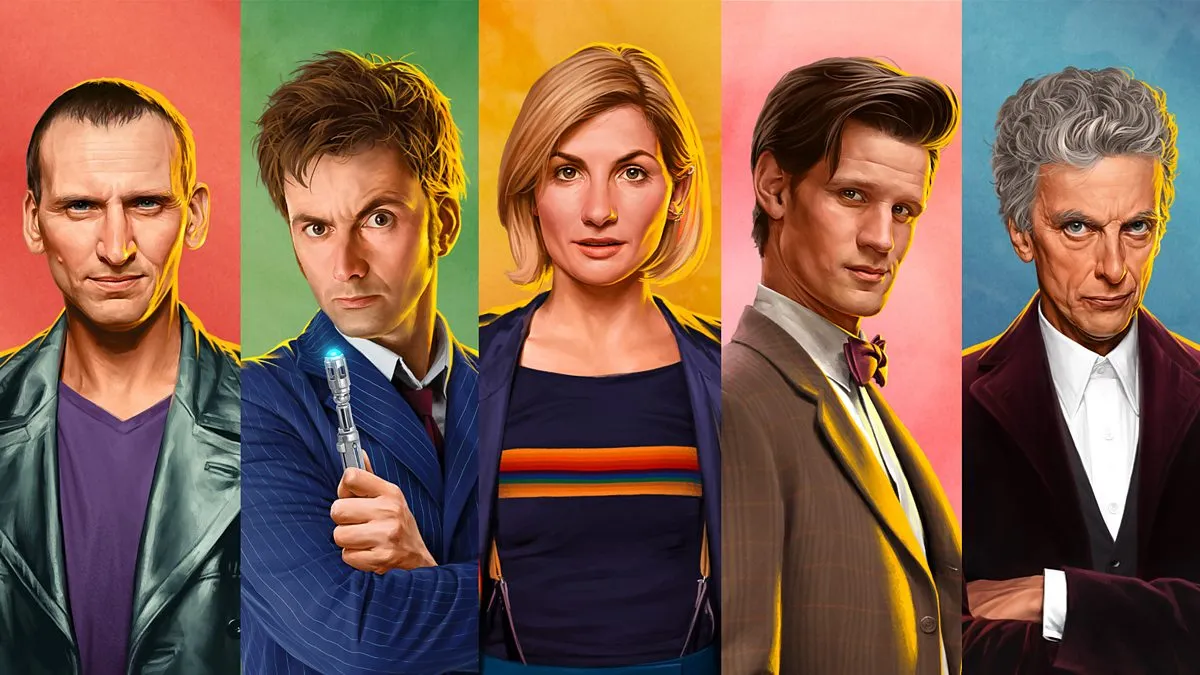
So by the time the Doctor gets an old face back and reflects on all of this accumulated trauma, it feels like the right time for a fresh start… more than the usual regeneration. I know a lot of people weren’t keen on the bigeneration, but I felt if you were going to do it at any point, now felt pretty apt. The Doctor rips a new version from himself. Cracking on, despite a difficult history, and having fun.
It would mean that we would see a Doctor, shaped positively by trauma and living with it in healthy ways, highlighting to viewers that no matter what you’ve been through, you can indeed live a happy and fulfilling life. I was looking forward to seeing the Doctor continue to have emotional depth but in a different way.
Now. What made the Doctor compelling as an emotional character until this point was that the inner and outer tempo of the actors playing them were often mismatched. That’s right – it was the fact that the Doctor from the outside looked composed a lot of the time. He was fine and in control. But behind that steely exterior, there was the exact opposite happening. He was sad, or angry, or guilty. Inside, you could see that he wasn’t totally in control. This would often be because he was avoiding his emotions, or having to talk about them.
In real life, this wouldn’t be a very healthy way of dealing with negative emotions, but in a dramatic sense, it works very well as a tool to get the viewer to look deeper into the hearts of a character. We are left more emotionally invested in this character because of the dichotomy of the Doctor’s apparent composure, and his inner emotional journey.
And that doesn’t just go for the negative emotions either – how many times would we see the Doctor positively beaming, but instead of bouncing around screaming with joy, they just offer us a twinkle in the eye or a smile? The Doctor lights up when he realises Martha is excellent companion material in the hospital in Smith and Jones; he talks to Jo Grant in the Sarah Jane Adventures episode The Death of the Doctor about how proud he is of all of his companions; he’s even speechless and frozen with joy when he sees a Werewolf of all things in Tooth and Claw.
There are countless examples of positive and negative emotions that the Doctor exhibits, but there is a dichotomy between what is felt quite intensely internally and what we see of this feeling externally.
It is this dichotomy that the Fifteenth Doctor severely lacks.
Cry me a River…
Here’s the journey I went through while watching Doctor Who over the last year or so.

When sitting down to watch The Church on Ruby Road on Christmas Day 2023, I had probably had a couple of glasses of wine and I was all emotional because Doctor Who was back on Christmas Day television where it belonged. Maybe it was that, or perhaps the Doctor tearing up because someone who was adopted like him was snatched out of existence as a baby was just a beautiful, emotive scene that got me in the feels.
When Ruby’s life was erased because Goblins went back in time and kidnapped her and the Doctor broke down, I genuinely thought: “This is a gorgeous moment. Ncuti Gatwa has pitched this perfectly. Now I want the Doctor to go back in time and save that baby! Do one, Goblins.”
And then in Space Babies, the Doctor realises that the Bogeyman is ‘the last of its kind’ and as he saves it from plummeting into the vacuum of space, the tears start to flow. This was comparatively less impactful because technically the Bogeyman isn’t the last of its kind; it is an amalgamation of baby snot that has somehow developed sentience and mills around a spaceship (the idea is still repulsive to me). But hey, Ncuti acts it very well, so props to him for bringing the emotion out of this moment.
Oh. In The Devil’s Chord, the Doctor tears up because the Maestro is a God-like being like the Toymaker who caused him to bigenerate, which we are learning only now was very traumatic for him. Feels like retroactive character development, but hey, Ncuti is acting it well.
Boom! He’s crying again while stuck on that landmine. Makes sense, we can let that slide.
73 Yards. Ah! No tears were shed this week. But he’s only in it for one minute. Still counts, right?
Oh, darn it. We get to that excellent scene at the end of Dot and Bubble.

The Doctor, the enlightened chad that he is, still wants to save the racist people of Finetime. But out of stubborn prejudice, they do not want to be saved. The Doctor is incredulous. Heartbroken. Angry, maybe. He screams. And tears are streaming down his face. This was quite honestly one of the greatest moments in the show’s entire history, I would go so far as to say. And, quite rightly, the Doctor is distraught at this moment.
But sadly, it loses its impact because this Doctor has shown this outward display of emotion multiple times already before we get to this episode. From this point onwards, I began to take issue with him resorting to crying as an emotional response to dramatic scenes in every story.
Fast forwarding, in Rogue, the Doctor cries when Rogue leaves at the end of the episode. In The Legend of Ruby Sunday, he cries when a member of UNIT gets killed by alien sand. In Empire of Death, he cries when he thinks Sutekh destroying the universe is his fault somehow. And when he has to throw Sutekh in the time vortex and feels guilty about it. And when Ruby leaves the TARDIS. Triple whammy!
By the time we get to Joy to the World, and the Doctor cries over the death of a random Silurian, I don’t find it as impactful when in the same episode he cries over the end of his tenure working in a hotel with his friend Anita, which feels a lot more meaningful. At this point, I am desensitized. The character cries way too often for it to ring true or have any impact.
And no, it is not because it is annoying to see the display of emotion, or it isn’t OK to cry. In real life, cry as much as you blooming well need to. But this is a drama, and this is a fictional character. If he cried every so often during only the most poignant moments, you’ve got yourself some memorable scenes, and the portrayals of outward emotion are used to their greatest effect. Because he is crying at some point in every episode, it does feel a bit forced and contrived.
It has unfortunately become a bit of a meme, and people start to ask ‘What will he cry about next?‘. The repetition of the Doctor’s crying becoming something of a joke among fandom, perhaps stigmatises men showing and experiencing negative emotions, which is probably the opposite of what is intended by the writers and the performance in having this be a regular occurrence for this particular Doctor.
I think the issue is not in the isolated moments where the Fifteenth Doctor cries but in the consistency of it. The character has made a habit of it. It isn’t boring because he’s too emotional, or any of that rubbish. It is frustrating because it feels routine, default, and like a bit of a gimmick. And instead of reserving it only for especially moving moments such as Dot and Bubble‘s masterful ending scene, we get it every week even during the parts of the season that are weaker (case in point – he only knew Rogue for five minutes – why have the character cry?).
How to make the Doctor a truly emotional character…
I would guess the reason for the creative choice of having the Doctor always cry is to show he is in touch with his emotions more than he was before. This makes sense for the character, but I just feel like there are better ways to show it.
As I was saying before about the inner/outer tempo, when there are moments where it was perhaps problematic for the Doctor to lose his cool, it would have been way more powerful if Gatwa had played the Doctor as being in a crisis internally but doing everything in his power to remain calm externally. In other words, what if the character didn’t resort to crying as a default response, and there were more scenes where emotions were portrayed more subtly? This, I feel, opens up a more varied emotional portrayal.
In all the examples I mentioned above, the Doctor experiences a variety of emotions. Sadness (at the thought of Ruby being taken away from their family as a baby), anxiety (that the landmine will blow underneath him) and anger (at himself for not stopping Sutekh from wiping out the universe). The Doctor is a lot more truthful, and a lot more interesting, when his reactions to things are as dynamic as the emotions in the text.
I don’t have an issue with this Doctor being emotional, but I think it does the character and Gatwa’s ability as an actor a disservice to habitually resort to tears as a way of expressing the character’s emotional depth.
Within the context of a drama, outward displays of negative emotion can feel one note and, if consistent enough, unengaging. It can end up as streams of tears or wailing, which is hard to do convincingly. More subtle portrayals of emotion, I would argue, lend themselves to greater dynamism and greater truth within a performance.
There are countless ways of portraying a character as guarded, tense, nervous, depressed, etc. when it is somewhat contained. And this leaves the character more mysterious and open to interpretation, which is perfect for Doctor Who, is it not?
So this begs the question: how do we make it obvious that this Doctor is more emotional, but in different ways to having him cry in every episode?
1. Have the Doctor get triggered and struggle to manage it
The closest I think Ncuti got to portraying the Doctor’s emotions like this was in Boom, by the physical aspect of his performance being sidelined for the ‘stuck on a landmine’ premise. He acted it superbly! For most of the episode, he was quite obviously in distress, but it was contained behind a somewhat stable exterior.
What if we had more moments when the Doctor’s emotions were tested but the situation demanded he remained in control? Having the Doctor being reminded he was the last of his kind by the Bogeyman in Space Babies, and having him more visibly resisting that distressing fact while saving it from being hurtled into space, would have made his portrayal more fiery.
I stress: you can be both a badass and be in touch with your emotions, of course. But in moments such as this one, I prefer to see the Doctor as a force to be reckoned with, and not someone who I have to worry too much about getting out of the situation alive.
Not to mention, the Doctor is supposed to have been through a non-linear rehab. One way of showing his newfound emotional intelligence and healing would be to show him emotionally regulating during these tense moments. I’m not saying he should never lose his cool or still be affected by trauma. He just shouldn’t be losing his cool in every episode if this is the route they want to take with the character.
2. Don’t revert to old character tropes
Alarm bells rang in my head when the Doctor was written as being his old, emotionally distant self. Take the end of Rogue when Ruby asks the Doctor if he’s OK when he loses his new flame. He shrugs it off – “Anyway, it is what it is. So, onwards. Fine. Next. Off we go.” Insistent that he doesn’t talk about those emotions.
No no no no no no no no no NO!
Why in the name of Rassalon would you make the Doctor emotionally free and then do this dance again? It is a sweet moment where Ruby gives the Doctor a hug and everything, but it is such backward character development. And if this Doctor is characterised as being in touch with his feelings, what would not complement toning down the consistently outward portrayal of emotion is also having him show no emotion. Resistance on the outer tempo is impactful, but not this level of resistance. It is so ‘last year’ for this character.
So basically what I’m saying here is dial down how obvious the emotion is, but not so much that emotion is being repressed from the character like before. It’s about finding a good balance!
3. Put the Doctor in new situations to draw out new emotions
It would be remiss to suggest that whoever plays the Doctor should try and present the character as having emotional dynamism, without also suggesting that the writing should draw that out of the character as well. Doctor Who has been going on long enough that to be interesting, the character has to be put in situations that will test him and draw out responses and performances that we have never seen before.
We’ve never seen the Doctor work a minimum wage job for an extended period until we were given a very quick montage of it in Joy to the World. This is interesting as hell! I wish it was the whole episode. How does he cope? What does he like and dislike about the experience? What does he learn about human life in the modern world? How does that change him? How does it make him feel?
These were all questions I had that weren’t answered. I think for Who to still have its place on the telly, it’s got to prioritise storylines like this. It is way more intriguing than having him get angry about the Daleks trying to wipe out the universe for the gazillionth time. And what a gift that would be for the actor who plays it. It would be much easier to perform with emotional dynamism when all the emotional dynamism is on the page, especially if it is an original idea.
Here’s an idea… what if, instead of Ruby, it was the Doctor who was being pursued by the mysterious woman in 73 Yards? You cannot tell me that it wouldn’t have been way more fascinating. He would have been stripped of his TARDIS; presumably ‘the woman’ would have had the power to stop his sonic from working. Ruby would have vanished from existence, he would have had to have a VERY difficult conversation with Carla and Cherry. And if the Doctor was losing pals from UNIT because of whatever the woman whispers to people, then, OF COURSE, he’d find a way to still fight evil by stopping Roger ap Gwilliam from being in power for too long. It’s perfect!

And think about how that would make the character feel. How would he deal with those feelings of worthlessness having relied on being a time/space traveller to find meaning through adventure and fighting evil, and that being taken away from him? How would he overcome those feelings and try and carry that heroism in an ordinary life on Earth beyond stopping Roger ap Gwilliam? What would he do to make the world a better place while being stuck in a new life, pursued by an ever-present, sinister figure, always haunting him?
What if the mysterious woman could even stop the Doctor from regenerating, and he grew old and found love and got a deeper appreciation for humans and the natural journey they live of travelling forwards in time, one day at a time, the long way round…
This would have been unlike anything in the show’s 60-year history. This would have maximised an actor like Ncuti’s ability to perform emotional dynamism. More stuff like this, please!
In conclusion…
There have been lots of rumours floating around lately about cancellations, actors leaving, blah blah blah. Whether I think it is true or false, I am looking forward to another series of Doctor Who this year and another series of Ncuti Gatwa in the role.
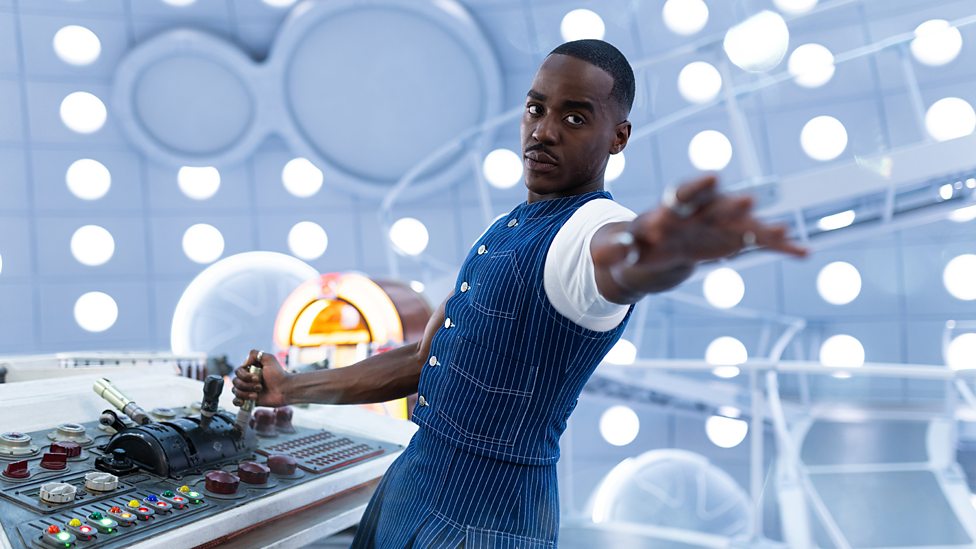
Best case scenario, the character is written and performed to cry only in the most poignant and moving scenes in the series. This means we have a Doctor more in control, dynamic, interesting, mysterious, and ultimately a lot happier and freed from all the crap he’s gone through, which is essentially the starting point of this incarnation that sets him out from the rest.
Worst case scenario; nothing changes, and crying is still a default response for the Fifteenth Doctor. But the world will keep on spinning, Ncuti’s portrayal will continue to entertain and uplift us, and hey, if the show losing some dramatic impact can teach anyone watching that feeling our emotions and releasing them is perfectly OK, then is it the worst thing they could have done with this character?
When it comes to Season Two, as long as Mrs Flood doesn’t turn out to be a Zarbi, I’ll pretty much accept anything.


Finally! I have combed the internet for someone who has a well thought out critique on all the crying and I found it. You said it so well. My children have made a joke out of it, “Oh look! Now the crying is even in the preview for next weeks episode.” Argh. It has lost all emotional resonance and they obviously haven’t dropped it in season 2. Talk about frustrating.